

The Professor Who Taught His Students to Look at the Stars
John Senior believed education began not with textbooks but with wonder, and he proved it at the University of Kansas.


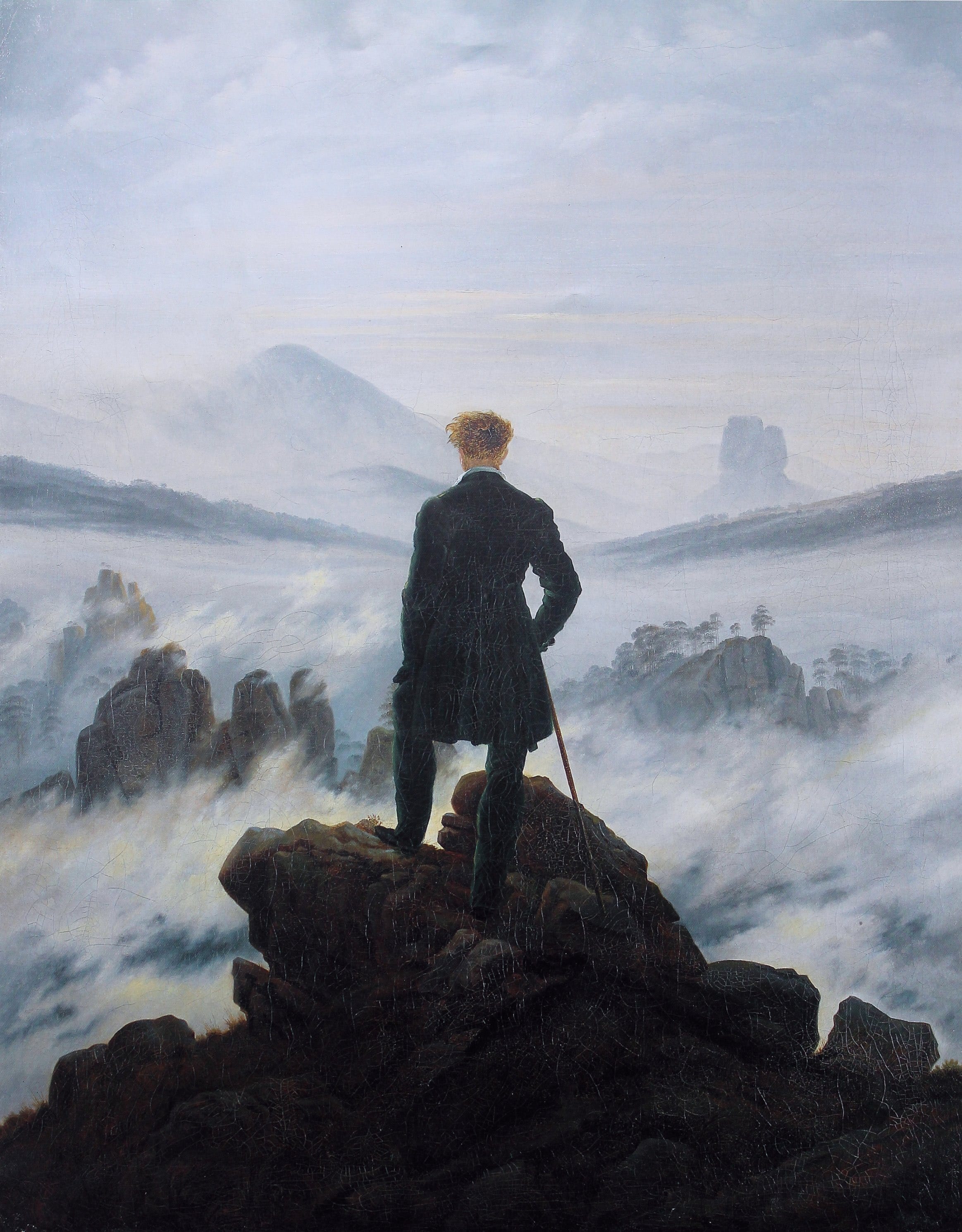
Sometime in the early 1970s, a group of freshmen at the University of Kansas walked out onto a field at night and lay down in the grass. Their professor had told them to put away their notebooks. He did not want them to write anything down. He did not want them to analyze anything. He wanted them to look up.
They looked at the stars.
This was not what a college education was supposed to look like. There was no syllabus for stargazing. No rubric, no learning outcome, no assessment. Just a professor, his students, and the night sky. The professor’s name was John Senior, and what he was doing in that field was the most radical thing happening in American higher education at the time. He was teaching wonder.
Most of you have probably never heard of him. Senior does not appear in the standard histories of education. He is not taught in schools of pedagogy. His books have been out of print for years at a time, passed from hand to hand among a small network of readers who discovered them and could not put them down.
And yet his ideas about education, about what children need before they can learn anything worth learning, run through everything we do at Chapter House.
The Man
John Senior was born in New York in 1923. As a child, he wanted to be a cowboy. At thirteen, he ran away from home and worked as a ranch hand in the Dakotas and Wyoming. He attended Columbia University, where he came under the influence of the poet and English teacher Mark Van Doren. He eventually earned his doctoral degree there and became a professor of English, Comparative Literature, and Classics, teaching at Bard and Hofstra Colleges, Cornell, and the University of Wyoming before settling at the University of Kansas.1
His intellectual path was restless and honest. He moved through the fashionable academic currents of the mid-twentieth century and found them wanting. He had received a genuine classical education at Columbia, and he saw with increasing clarity that the students arriving at his door each year had not. Something had been lost between his generation and theirs. Not intelligence. Not effort. Something deeper. The soil in which ideas could take root had been stripped away. His students could decode sentences. They could pass examinations. But they lacked the imaginative ground that makes real learning possible.
In 1960, he became Roman Catholic. He had searched widely, exploring communism, Eastern spirituality, Thomistic philosophy, Newman, and followed the argument where he felt it led. In the secular academy of the 1960s, converting to Rome was about as career-enhancing as setting your tenure file on fire. He did it anyway.
The Integrated Humanities Program
In 1970, Senior and two colleagues at the University of Kansas, Dennis Quinn and Frank Nelick, founded something they called the Integrated Humanities Program.2 It was a four-semester course for undergraduates, and it operated on principles that would have seemed perfectly ordinary in the twelfth century but were scandalous in the twentieth.
They read great books aloud. Not excerpts or critical editions with footnotes longer than the text, but the books themselves, read aloud in a room full of students who were expected to listen. They memorized poetry. They waltzed. They went outside at night and looked at the stars. There were no conventional examinations. No textbooks. The professors chose as the program’s motto the Latin phrase nascantur in admiratione (Let them be born in wonder) and they meant it literally.
Senior was deeply suspicious of what he called the “collective essay,” the modern seminar format where everyone shares opinions but nobody listens. He believed it produced clever arguers rather than wise human beings. In The Restoration of Christian Culture, he wrote that “no sooner is a phrase flung out than — snap! — a critical question. ‘What do you mean by truth?’ ‘What do you mean by mean?’ ‘What do you mean by what?’ There is no slow growth of the mind.”3
In place of that kind of discussion, the IHP offered something closer to what the ancients practiced: A teacher who had authority because he knew something, and students who listened. Senior did not want students who could win arguments. He wanted students who could see.
The results were remarkable. Students who entered the program as ordinary American eighteen-year-olds emerged able to think, write, and reason with a clarity that their peers could not match. Many of them converted to Catholicism. Bishop James Conley of Lincoln, Nebraska, who converted with Senior as his godfather, later said: “John Senior was a gifted professor of classics, a writer, poet, thinker and a student of culture... he led me into the Roman Catholic Church.”4 Archbishop Paul Coakley of Oklahoma City was his roommate at Kansas and entered the Church through the same circle of influence. The founding monks of Clear Creek Abbey in Oklahoma are IHP alumni.
The program’s success made it a target. Concerned about the number of students converting, the university opened an investigation. The investigators found no evidence of religious indoctrination in the classroom. It made no difference. The administration restructured the program, placed it under a hostile department, and the program was effectively eliminated by 1979. Senior continued teaching at Kansas until his retirement. He died in 1999.
Those who studied under him went on to found schools, enter religious orders, raise families, and keep his ideas alive in the only way that matters: By practicing them.
The Thousand Good Books
Of all of Senior’s ideas, the one that speaks most directly to what we are doing at Chapter House is his concept of the “thousand good books.”
Senior observed that the Great Books movement of the mid-twentieth century had “not failed as much as fizzled, not because of any defect in the books … but like good champagne in plastic bottles, they went flat.”5 You could hand a student Plato’s Republic or Aristotle’s Metaphysics, and the words would sit on the page like seeds scattered on concrete. Not because the student was stupid, but because something was missing underneath.
Here is the passage that changed the way we think about education:
...The seeds are good but the cultural soil has been depleted; the seminal ideas of Plato, Aristotle, St. Augustine and St. Thomas thrive only in an imaginative ground saturated with fables, fairy tales, stories, rhymes and adventures: the thousand books of Grimm, Andersen, Stevenson, Dickens, Scott, Dumas and the rest.6
The soil metaphor is the key. Senior was not offering a reading list. He was describing an ecology. The great philosophical and theological ideas of Western civilization require an imagination that has been prepared for them. A child who has never read fairy tales, who has never been lost in an adventure story, who has never memorized a poem, lacks the inner landscape on which the great ideas can take root. You can teach him the propositions. You cannot make him understand them. Understanding requires imagination, and imagination is formed by stories.
Senior divided his thousand good books by age. The Nursery (ages 2 to 7) included Æsop, Grimm, Andersen, Beatrix Potter, Lewis Carroll, Mother Goose, Kipling, and the Lambs’ Tales from Shakespeare. The list grew more demanding as the reader grew older, building through adolescence toward the great books themselves. The whole structure assumed that reading begins with someone reading aloud while the child looks at the pictures.7
He was insistent, too, on the right approach, that of “the amateur, the ordinary person who enjoys what he reads, not expert in critical, historical or textual techniques which destroy what they analyze.”8 No study guides. No critical editions. No dictionaries propped open next to the book. Just a child, a story, and the slow formation of an imagination rich enough to receive the great ideas when they come.
This is what we are trying to do with our box sets. Every book in Chapter I through Chapter IV was chosen because it belongs in the soil Senior described. Æsop, the Greek myths, the Norse legends, Beowulf, Tales from Shakespeare, Our Island Story: These are books from the thousand good books, the cultural ground in which everything else grows.
The Death and the Restoration
Senior wrote two major books, and their titles tell you the shape of his thought.
The Death of Christian Culture was published in 1978. It is a diagnosis. Senior looked at the twentieth century and saw a civilization that had cut itself off from its own roots. The liberal arts had been replaced by technical training. The stories that once formed the moral imagination of every educated person had been dropped from the curriculum.
But do we want to go so far as to have a merely technical civilization? A hundred years after the great revolution in our culture, we might question the “too great place” of science. So many are shocked today to find their children lacking religious motivations, lacking patriotism, lacking even a very clear sense of moral responsibility. They fail to realize that these virtues are in great part culturally determined. We have lived on cultural capital from a past generation, having failed to counteract depletion.9
“Cultural capital from a past generation.” That phrase has stayed with us since we first read it. Senior saw in the 1970s what many of us are only now recognizing: The virtues and sensibilities we associate with civilization are not automatic. They are transmitted. They are passed from one generation to the next through stories, through music, through the thousand small acts of culture that a society performs without thinking about them. Stop performing them, and within a generation or two, the capital is spent.
The Restoration of Christian Culture followed in 1983. If the first book was the diagnosis, the second was the prescription. And it was not a political program or an institutional reform. It was startlingly simple. Senior wanted people to go home, turn off the television, and read aloud to their children.
We must put our greatest effort into restoring reading in the home, first and foremost reading aloud around the fireplace of a winter’s evening or on the porch of a summer’s afternoon; and for the older children and adults, silent reading, each by himself as they all sit together in the living room, reading, not the hundred great books which are for analytic study and mostly for experts, but reading what I shall call the thousand good books.10
The radicalism of that proposal is easy to miss. Senior was not recommending reading as a hobby. He was arguing that the restoration of an entire civilization depends on whether families will sit down together and read good books. The path out of cultural decline does not run through legislatures, universities, or media companies. It runs through living rooms.
He was equally frank about what must be removed. Senior argued that the problem was not just the absence of good things but the presence of bad ones. He was famously hostile to television, calling it “generally and determinantly evil,” not because of its content but because of what it does to the faculties of imagination and attention.11 A child raised on screens, he believed, has had damaged the very capacities that stories are meant to develop.
The deeper argument in Restoration is about the order of knowledge. Senior followed the ancients in distinguishing four degrees: “the poetic, where truths are grasped intuitively as when you trust another’s love; the rhetorical, where we are persuaded by evidence, but without conclusive proof; … the dialectical … beyond a reasonable doubt; and finally, in the scientific mode … we reach to absolute certitude.”12
Modern education skips the first two steps and begins with the third or fourth. It tries to build the house from the roof down. The poetic mode, the mode of imagination and wonder, is the foundation on which everything else rests. And the poetic mode is formed by the thousand good books.
Why He Matters Now
We are writing this in 2026, forty-three years after The Restoration of Christian Culture was published. Every problem Senior identified has grown worse.
He warned about the destruction of imagination by electronic media. We now raise children on devices that make television look quaint. He warned about the depletion of cultural capital; reading rates have continued to fall, and the stories that once bound the English-speaking world together are now known only to specialists and a scattered company of parents who still read aloud after dinner. He warned that technical education without imaginative formation produces people who can operate systems but cannot evaluate whether the systems are good.
But Senior was not a pessimist. He was a realist who believed the remedy was available to anyone willing to apply it. The thousand good books still exist. The stars are still there. The capacity for wonder is still present in every child, waiting to be awakened by a parent who opens a book and begins to read.
This is where homeschool families enter the story. Senior wrote for a Catholic audience, and much of his prescription involves the restoration of liturgical and monastic life that lies outside the scope of what we do at Chapter House. But the educational core of his argument is for everyone who reads aloud to children. Every evening you spend with Æsop or Grimm or The Story of the Iliad, you are building the imaginative soil that Senior said was the prerequisite for everything else. You are counteracting the depletion. You are restoring the cultural capital.
You may not have thought of it in those terms. Senior would tell you that the terms do not matter. What matters is the reading.
Look Up
Andrew Senior, John’s son and himself a student in the Integrated Humanities Program, wrote the foreword to the 2008 edition of The Restoration of Christian Culture. He described his father’s life in a sentence that says more than most biographies: “My father’s whole life may be said to have been devoted to the stars, and to the love which moves them.”13
At Senior’s funeral, the priest concluded his homily: “His name is written in the stars.”14
There is something fitting in that. Senior spent his career insisting that education begins not with analysis but with wonder, not with the textbook but with the night sky. He told his students to put away their notebooks and look up, because the first and most necessary act of learning is the admission that there is something above you worth seeing.
We cannot give you John Senior’s classroom. That is gone. But we can give you his books, and we can tell you what he told his students: The thousand good books are waiting. The stars are still there. The simplest and most radical thing you can do for your children’s education is to sit down with them tonight, open a good book, and begin.
Biographical details drawn from John Senior, The Restoration of Christian Culture (Norfolk, VA: IHS Press, 2008), author biography; and from reporting in Catholic News Agency (September 2019) and Aleteia (September 2019).
The Integrated Humanities Program officially began in 1970, with a pilot year beginning in 1969. See “How a Kansas Humanities Program Shaped a Generation of Catholic Leaders,” Catholic News Agency, September 1, 2019.
John Senior, The Restoration of Christian Culture (San Francisco: Ignatius Press, 1983; reprinted Norfolk, VA: IHS Press, 2008), Chapter VI: “A Final Solution to Liberal Education.”
Joseph Pearce, “The Legacy of John Senior,” The Imaginative Conservative, March 12, 2021.
John Senior, “The Thousand Good Books,” appendix to The Death of Christian Culture (New Rochelle, NY: Arlington House, 1978; reprinted Norfolk, VA: IHS Press, 2008).
Senior, “The Thousand Good Books.” The same passage appears in slightly different form in The Restoration of Christian Culture, Chapter I.
Senior, “The Thousand Good Books.” The list is organized into stages: the Nursery (ages 2–7), School Days (ages 7–12), Adolescence (ages 12–16), and Youth (ages 16–20).
Senior, The Restoration of Christian Culture, Chapter I.
John Senior, The Death of Christian Culture, Chapter V: “The Emperor’s New Literature.”
Senior, The Restoration of Christian Culture, Chapter I.
Senior, The Restoration of Christian Culture, Chapter I.
Senior, The Restoration of Christian Culture, Chapter VI: “A Final Solution to Liberal Education.”
Andrew Senior, foreword to The Restoration of Christian Culture (IHS Press, 2008).
Andrew Senior, foreword to The Restoration of Christian Culture (IHS Press, 2008). Andrew writes that Fr. Anglés concluded by saying: “His name is written in the stars.”
Children are such natural philosophers, finding wonder in everything. The challenge is foster maturity without stamping that out. I love this idea of a thousand good books to help in that endeavor.
The history of Senior remember's me the Desd Poeta Society movie. It's passionate and so much human. Hearth warming.