

The Grade Is Not the Point
Why the most common measure of education measures almost nothing at all


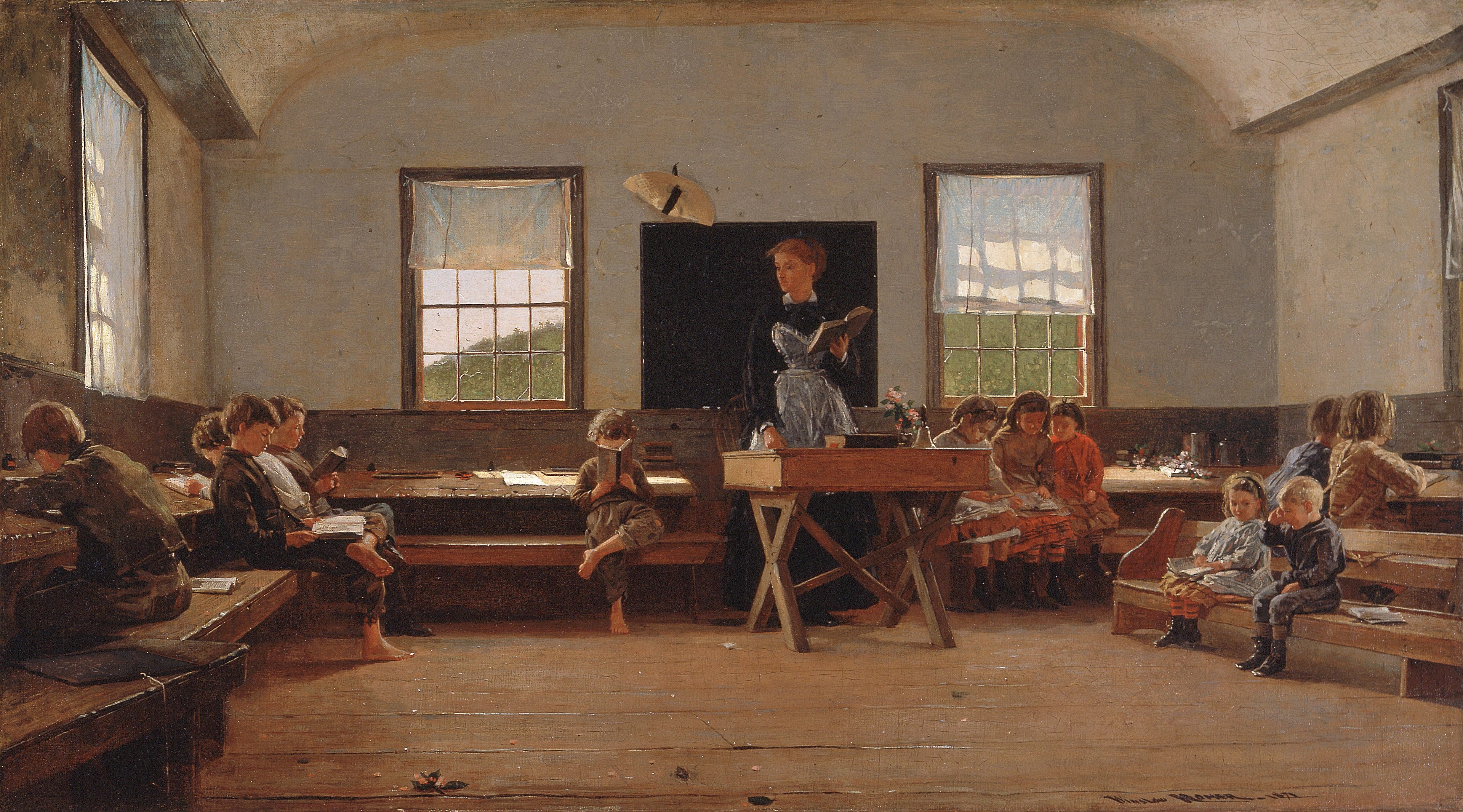
There is a question that homeschooling parents hear almost as often as ‘what about socialization,’ and it is this: How do you grade any of this?”
It is a fair question. We live in a world that runs on transcripts, test scores, and GPAs. Colleges want them. Scholarship committees want them. Your mother-in-law wants them. And if you are pulling your children out of a system that measures everything in letter grades and percentile rankings, it is natural to wonder what you are supposed to put in their place.
We want to answer that question honestly. But first, we need to ask a different one: What are grades actually measuring?
The Person A / Person B Problem
You have probably heard some version of this comparison before. Person A was valedictorian. Straight A’s. Was accepted at a prestigious university. He now lives in his parents’ basement, working a job he hates, buried in student loan debt, perhaps for a degree he did not finish.
Person B rolled into graduation on two wheels with a GPA just barely above passing. His favorite saying was “D is for diploma.” His teachers wrote him off, and he never set foot in a college classroom. He now runs a successful small business, owns his home, coaches his son’s baseball team, and reads more books in a year than most college graduates read in a decade.
It is a familiar story, and probably a cliche at this point. But the reason cliches endure is that they contain a stubborn grain of truth. We have all met some version of Person A and Person B. The grade point average did not predict much of anything.
Here is the problem with this comparison, though: It still assumes the purpose of education is economic. If Person B makes more money, does that mean his education was better? We do not think so. If we are measuring education by income, we are still playing the world’s game. We have just moved the goalposts.
The real question is not whether grades predict income. It is whether grades predict knowledge. And the answer to that question is far more troubling.
A Surprisingly Recent Invention
For most of recorded history, there were no grades. Socrates did not hand out report cards. The medieval universities that gave us Oxford and Cambridge had no GPA. Students demonstrated their knowledge through oral disputation. They stood before their masters, argued their case, answered challenges, and proved they had understood what they had read. If you could not defend your thesis in public, no letter on a piece of paper could save you.
The grading system we know today is a modern invention, and a peculiarly American one at that. In 1785, Yale president Ezra Stiles recorded one of the earliest known instances of formal grading in America. He examined fifty-eight seniors and sorted them into four Latin categories: optimi (best), secundi optimi (second best), inferiores boni (less good), and pejores (worse).1 By 1837, Yale had converted these Latin descriptors into a numerical four-point scale, the ancestor of the modern GPA.
Letter grades came later. Mount Holyoke College introduced the A-through-F system in 1897.2 But even then, adoption was slow. As late as 1971, only about two-thirds of American primary and secondary schools used letter grades.3 The system that now feels inevitable and permanent is barely a century old in its current form.
And from nearly the moment grades were standardized, they began to inflate. In the 1950s, the average college GPA in the United States was approximately 2.5, a solid C+. The most common grade on a college campus was a C.4
Today, the average GPA exceeds 3.1, and at many institutions it is considerably higher. Since the 1960s, grades have risen at a rate of roughly 0.15 per decade on a four-point scale.5 Grades go up. Test scores do not follow. The number gets bigger, but the knowledge behind it does not.
What are we measuring, then?
Charlotte Mason Knew
Charlotte Mason (1842-1923), the British educator whose methods have shaped so much of the modern homeschool movement, saw this problem more than a hundred years ago. She did not mince words.
In Home Education, she wrote:
Emulation becomes suicidal when it is used as the incentive to intellectual effort, because the desire for knowledge subsides in proportion as the desire to excel becomes active. As a matter of fact, marks of any sort, even for conduct, distract the attention of children from their proper work, which is in itself interesting enough to secure good behaviour as well as attention.6
Read that again carefully. Mason is not saying grades are merely unhelpful. She is saying they are actively destructive. The desire for knowledge subsides as the desire to excel becomes active. The two impulses work against each other. The child who is chasing an A is not chasing understanding. He is chasing the A.
This is not a new observation. Any parent who has watched a child cram for a test, regurgitate the answers, and forget everything by the following week has seen it in action. The information entered short-term memory long enough to be performed on command, then vanished. The grade was earned. The knowledge was not.
In A Philosophy of Education, Mason went further. After more than a quarter century of experimentation across hundreds of schools, she reported that children of every age and every social class demonstrated “unlimited power of attention which acts without mark, prize, place, praise or blame.”7 Children do not need grades to pay attention. They need material worth paying attention to.
What Knowledge Looks Like Without Grades
If grades do not measure knowledge, what does?
Mason’s answer was narration. A child reads a passage once, or hears it read aloud, and then tells it back in his own words. No multiple choice. No matching columns. No fill-in-the-blank. Just: What did you take from that?
This sounds almost absurdly simple, and that is part of its genius. You cannot narrate what you did not understand. You cannot fake comprehension when you are standing in front of your mother, retelling the story of Theseus and the Minotaur in your own words. Every gap in understanding is immediately visible. Every connection the child makes (and children make extraordinary connections when given the chance) is immediately audible.
Mason’s schools tested by narration, and the results were remarkable. She set large amounts of reading across many subjects, allowed only a single reading of each passage, and then required students to narrate the whole or a given portion, either orally or in writing.8 The children rose to it. Not because they were exceptional children, but because the method respected them as persons capable of real intellectual work.
Compare this to the modern test. A multiple-choice exam asks the student to recognize the correct answer from a list of options. Recognition is the lowest form of memory. It is the difference between recognizing someone’s face in a crowd and being able to describe that face from memory. Narration demands the latter. A standardized test settles for the former.
The Machine Can Get an A
There is a final, uncomfortable proof that grades do not measure what we think they measure.
A machine can earn them.
In 2023, researchers found that GPT-4, the artificial intelligence model behind ChatGPT, could pass most college examinations, performing on par with human students across tens of thousands of multiple-choice questions.9 A separate study found that ChatGPT would earn a B to B-minus on a Wharton MBA final exam.10 It passed portions of the United States Medical Licensing Exam.11 After AI tools became widely available, one study found that student examination marks jumped by nearly twenty-two percentage points, with pass rates climbing from roughly fifty percent to eighty-six percent.12
If a machine can earn an A on your exam, your exam is not measuring anything uniquely human. It is measuring pattern recognition, information retrieval, and output format. That is precisely what machines are built to do. A grade that can be earned by a chatbot is measuring compliance, not comprehension. It is measuring performance, not knowledge. And it is certainly not measuring wisdom, character, or virtue.
No machine can narrate. No machine can sit at the dinner table three weeks after reading The Odyssey and suddenly say, “Odysseus reminds me of Grandpa,” and mean it.
What We Do Instead
At Chapter House, we do not include comprehension quizzes or unit tests with our books. We do not encourage you to grade your children’s reading of literature, either. This is not an oversight. It is a conviction.
We read. We narrate. We discuss. And we watch for the signs that actually matter.
Does the child ask questions about what he has read? Does he make connections between one story and another, between Theseus and David, between Odysseus and his own grandfather? Does he remember a passage weeks later and bring it up unprompted at the dinner table? Does he care?
We have a particularly vivid memory of our oldest child, shortly after we began educating using Charlotte Mason’s philosophies. We had read the story of Hamlet from Tales from Shakespeare by Charles and Mary Lamb, and he immediately said “Hey, wait a minute. This is a lot like The Lion King.” Hannah had to stop herself from doing a cartwheel in the dining room she was so thrilled.
Since then, there have been countless moments like this. And sometimes, weeks after the reading had taken place. It often takes time for a seed to grow, so to speak. For the ideas planted by the reading to come to fruition and have the impact that truly makes an education.
These are the real marks of education. They cannot be quantified on a four-point scale. They cannot be printed on a transcript. But they are visible to any parent who is paying attention, which is, after all, what parents are supposed to do.
Mason put it best in School Education: “The question is not, — how much does the youth know? when he has finished his education — but how much does he care? and about how good a range of subjects does he care?”13 A child who earns straight A’s but does not care about what he has learned has not been educated. A child who never receives a single grade but loves knowledge and pursues it for its own sake has received the finest education in the world.
The Real Transcript
We understand the practical concern. If you are homeschooling and your child needs a transcript for college, you will need to produce grades of some kind. We are not naive about this. We must do this ourselves to be reported to our state. Do what you must to satisfy the bureaucratic requirements. But do not confuse the bureaucratic requirement with the thing itself.
A grade is a number on a page. It tells you what a student performed on a particular assessment on a particular day under particular conditions. It does not tell you what he knows. It does not tell you what he loves. It does not tell you who he is becoming.
As one old saying has it, “Education is that which remains, if one has forgotten everything he learned in school.”14 We would go one step further. Education is what remains when you have forgotten you were ever graded at all. It is the story you cannot stop thinking about. The question you cannot stop asking. The virtue you practice without being told.
That is what we are after. Not the grade, but a child who cares about learning.
George Wilson Pierson, The Founding of Yale: The Legend of the Forty Folios (New Haven: Yale University Press). Stiles recorded his examination of fifty-eight seniors in his diary in 1785, sorting them into optimi, secundi optimi, inferiores boni, and pejores.
The Saturday Evening Post, “The Origin of Grades in American Schools,” February 2024. Mount Holyoke’s 1897 system is widely cited as the first use of modern letter grades (A through F) in American higher education.
Human Restoration Project, “A Brief History of Grades and Gradeless Learning.” As late as 1971, only approximately 67% of American primary and secondary schools used letter grades.
Stuart Rojstaczer and Christopher Healy, “Where A Is Ordinary: The Evolution of American College and University Grading, 1940-2009,” Teachers College Record, 2012. In the 1950s, the average college GPA was approximately 2.52.
Ibid. Grades have risen at a rate of roughly 0.15 per decade since the 1960s, with the average now exceeding 3.1.
Charlotte Mason, Home Education (London: Kegan Paul, Trench, Trubner and Co., 1886), Part V, Chapter VII, “The Will — The Conscience — The Divine Life in the Child.”
Charlotte Mason, An Essay Towards a Philosophy of Education (London: Kegan Paul, Trench, Trubner and Co., 1925), p. 255. “Every child of any age, even the so-called ‘backward’ child seems to have unlimited power of attention which acts without mark, prize, place, praise or blame.”
Ibid. Mason described her method: “A large number of books on many subjects were set for reading in morning school-hours; so much work was set that there was only time for a single reading; all reading was tested by a narration of the whole or a given passage, whether orally or in writing.”
Taylor & Francis, “ChatGPT Performance on MCQ Examinations in Higher Education: A Scoping Review,” Assessment & Evaluation in Higher Education, 2023. The review covered fifty-three studies and more than 49,000 multiple-choice questions. GPT-4 passed most examinations with performance on par with human subjects.
Christian Terwiesch, “Would Chat GPT Get a Wharton MBA?” Mack Institute for Innovation Management, University of Pennsylvania, January 2023.
Tiffany Kung et al., “Performance of ChatGPT on USMLE: Potential for AI-Assisted Medical Education Using Large Language Models,” PLOS Digital Health, February 2023.
Study Finds, “College Students’ Test Scores Soared After ChatGPT — Writing, Not So Much,” 2024. Examination marks increased by 21.88 percentage points from pre-AI to post-AI periods.
Charlotte Mason, School Education (London: Kegan Paul, Trench, Trubner and Co., 1905).
Often attributed to Albert Einstein, this remark appears in his 1936 essay “On Education,” where he credited it to an unnamed “wit”: “The wit was not wrong who defined education in this way: ‘Education is that which remains, if one has forgotten everything he learned in school.’” The original source is unknown. See Quote Investigator for full provenance.