

Charlotte Mason Was Right About Almost Everything
What did a British educator who lived a century ago understand about children that we are only now struggling to remember?


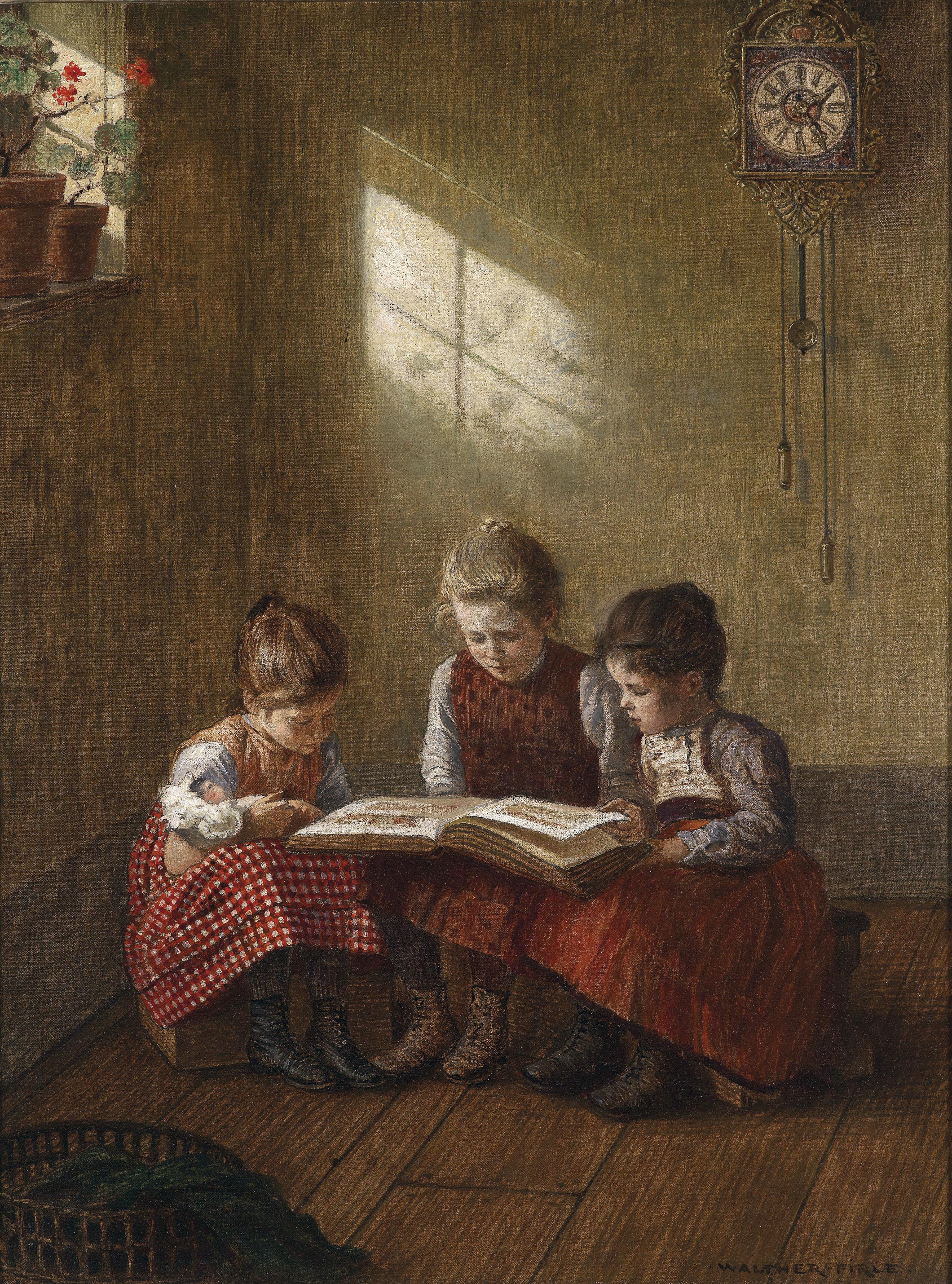
Charlotte Mason died in 1923, long before standardized testing, before the internet, before anyone had coined the term “screen time.” She never saw a TikTok algorithm or a Chromebook. Yet if you read her work, you realize she anticipated nearly every problem we face in education today. More than that, she left us the solutions.
We live in an age of unprecedented information access. Children can summon facts on demand. They have instant access to capitals, dates, chemical formulas. And yet something fundamental is missing. They are not educated. They are informed. And Mason knew, with the clarity that comes from decades of watching children learn, that these are entirely different things.
Who She Was and Why It Matters
Charlotte Mason was born in Wales in 18421 and lost her mother at sixteen, her father the following year. She trained as a teacher at a time when education meant much what it means now: Rote memorization, dry textbooks, and the transmission of facts from one head to another. But something in her rebelled against this model. She believed children deserved better.
By 1892, Mason had founded the House of Education in Ambleside,2 in the English Lake District, where she trained teachers in a radically different approach. She believed teachers should be educated themselves (genuinely educated, not merely trained in methodology). She believed they should understand why they were teaching the way they taught. Over her lifetime, she trained roughly four hundred teachers.3 Those teachers touched the lives of around forty thousand children.[3-1] And the ripples continued outward.
Mason also founded the Parents’ National Educational Union, or PNEU,4 a community that brought parents and educators together around shared conviction about what education could be. She wasn’t writing for an elite. She was writing for ordinary families who wanted something different.
What made Mason remarkable wasn’t that she had a new technique. It was that she had a vision of what education actually is.
The Core: Three Things Education Must Be
Mason offered a definition so elegant and so true that it deserves to be quoted in full: “Education is an atmosphere, a discipline, and a life.”5
Not a curriculum. Not a method. Not a program.
By atmosphere, she meant the environment in which a child grows: The books they encounter, the people they spend time with, the ideas they breathe in daily. It is not something you pour into a child like water into a vessel. It is something they absorb, the way they absorb the values and habits of their home. By discipline, she meant the training of habits: Attention, obedience, self-control, curiosity, and kindness. Not punishment. Patient, consistent formation. These habits, once formed, become the structure that allows a person to learn and to live well.
And by life, she meant something more fundamental still. Education is not preparation for life. It is life. What a child is learning now, in this present moment, is the actual material of their education. Not drill for some distant test. Not rehearsal for some future role. The child’s present engagement with ideas, with nature, with other people is the education happening.
At the heart of all this was another conviction: “Children are born persons.”6
This might seem obvious to us now. But Mason was writing in an era when children were seen as incomplete humans who needed to be molded, shaped, and filled with the right information. She insisted on something different. A child is not a blank slate waiting to be written upon. A child is a person with will, with taste, with the capacity to think and to choose. The educator’s job is not to shape the child, but to invite the child to engage with what is true, good, and beautiful.
From this conviction flowed everything else in Mason’s philosophy.
Living Books and the Art of Narration
Here is where things get practical. If children are persons, capable of engaging with ideas, then what should they read?
Mason argued fiercely against textbooks. Not because textbooks are always bad, but because they flatten. They reduce complex ideas to summaries. They strip away the personality of the writer. They substitute second-hand accounts for direct engagement with the thought of a real human being.
Instead, Mason advocated for what we now call “living books.” She meant books written by authors who cared deeply about their subject, who had something to say, who wrote with conviction and style using language that would elevate the reader. History books written by historians who loved history. Science books written by naturalists who had spent years in the field. Literature by writers who understood the depths of human experience. Books that had life in them.
This sounds simple. But it requires real curation. It requires knowing literature. It requires rejecting the convenient textbook in favor of the real thing, which takes time to find and sometimes effort to read.
And then came the method that made it work: Narration.
The child reads or listens to a passage, and then tells back what they understood. Not a quiz. Not a test. Simply: What did this mean to you? What do you remember? What struck you?
Mason found that narration accomplishes something that quizzes and worksheets cannot. It requires the child to think about what they have read. It makes them an active participant rather than a passive receiver. It trains attention, develops their own voice, reveals what they have truly absorbed rather than what they can parrot back.
And here is something she noticed: When children narrate, they remember. Not because they are drilling. But because the act of putting understanding into their own words burns it into their memory. The brain, engaged in genuine thought, retains what the child has thought about.
We spread an abundant and delicate feast in the programmes and each small guest assimilates what he can.7
She trusted that children, when given access to real ideas, would naturally take what nourished them. She did not believe every child must learn the same thing from the same book at the same time. She believed in abundance and in individual appetite.
Short Lessons, Habit Training, and Nature Study
Mason’s classroom hours would seem shockingly brief to modern educators. Children might work for twenty or thirty minutes on one subject, and then move to something else entirely. The day had variety, rhythm, change.
Why? Because she understood human attention. A mind forced to concentrate beyond its capacity becomes dulled rather than sharpened. A short lesson, done with full attention, accomplishes more than a long, drawn-out session where the child’s mind has wandered. Quality of attention matters more than duration.
She also insisted on what she called “habit training.” Every day, there were practices meant to cultivate good habits: Attention, obedience, truthfulness, generosity, and self-control. Not through lectures on virtue, but through repeated practice of virtuous action.
Consider what this looks like in a real day:
You practice paying attention when you listen to a passage read aloud.
You practice obedience when you follow a direction.
You practice truthfulness when you narrate honestly about what you understood.
Virtue, in Mason’s view, is not something you learn about. It is something you embody through practice.
Then there was nature study. Children should spend time outdoors, observing. They should watch birds, collect leaves, notice the patterns of weather and seasons. This was not sentimental. It was epistemological. Direct observation of nature was a form of knowledge that no book, however good, could entirely replace. A child who had watched a robin build a nest, had seen how the bird carried grass and lined the cup, had waited for eggs and watched them hatch understood something about bird behavior that no textbook could convey.
Information and Education Are Not the Same Thing
Here is the critique of modern education that Mason articulated more than a century ago: “It cannot be too often said that information is not education.”8
Think about what schools prioritize now. Standardized testing measures what students know: Facts, figures, the ability to retrieve information. We have built our entire educational apparatus around the acquisition and demonstration of information. We have convinced ourselves that if children know more things, they are better educated.
Mason would say we have gotten the thing backwards:
Give your child a single valuable idea, and you have done more for his education than if you had laid upon his mind the burden of bushels of information.9
A single valuable idea. Not ten facts. Not a unit crammed with content. One idea, truly understood, engaged with, thought about, and integrated into the child’s growing understanding of the world. One book that moves a child. One idea that changes how they see things. This is education.
And she asks a question that should haunt us: “The question is not, how much does the youth know when he has finished his education, but how much does he care? and about how many orders of things does he care?”10
Does your child care? About history? About nature? About stories? About ideas? This is the real measure. Not whether they can pass a test on the American Civil War, but whether they are drawn to understand the complexities of that conflict because something in them hungers to know. Not whether they can identify the parts of a flower, but whether they stop to look at flowers. To wonder about them.
Mason believed that when children engage with real literature, real ideas, in an atmosphere of trust and abundance, they naturally begin to care. They develop what we might call taste. They start to recognize quality. They want more. They become, in other words, educated.
Where Chapter House Aligns (and Where We Are Honest)
We think about Charlotte Mason whenever we curate a list of Chapter House books.
We choose living books (novels and essays and story collections written by authors with something genuine to say). We believe in reading aloud together, the way Mason did. We know that when a parent reads to a child, something transfers beyond the words on the page. There is a shared experience. There is presence. The child is not alone with a screen. They are with a person who loves them, encountering ideas together.
We believe that stories are how we understand ourselves and the world. That wonder is a more reliable teacher than instruction. That a child who has read a great book has been genuinely educated in a way that no worksheet can match.
We chose our name because we wanted to invoke a certain kind of abundance, like the feast Mason described. We curate the books rather than offering everything, because curation matters. In a sea of infinite choice, someone has to say: These books are worth your time. These will nourish you.
But we want to be honest about something: We are not offering a complete Charlotte Mason curriculum. Mason had a full philosophy of education that included a structured approach to habits, nature study, and the progression of subjects across years. Chapter House provides something narrower and something different. We provide excellent books, and we provide the philosophy that living books matter. We trust parents and educators to build on that foundation in whatever way serves their particular children.
You could use Chapter House books within a full Charlotte Mason homeschool. But you could also use them in a traditional school as a supplement to textbooks. You could use them in unschooling, in classical education, in any approach that values real literature. The books themselves are what they are. The philosophy underlying our selection is Mason’s. How you use them is up to you.
Why Now
The world has changed since Mason’s time in ways she could not have anticipated. But the problems she was addressing have not disappeared. If anything, they have intensified.
Information is more abundant than ever, and we are drowning in it. Children have access to more facts than any child in history. And yet we are watching childhood anxiety and depression rise, attention spans collapse, and children who have been tested on a great deal but care about very little.
Mason’s critique applies with even more force now: Information is not education. A child who can Google anything does not thereby have an education. They have a tool. What they lack is what Mason was trying to cultivate: Genuine engagement with ideas, the ability to think carefully, the formation of taste, the development of a hunger to know.
Mason believed in the power of beauty and excellence. She believed that when you expose children to the best that has been thought, written, and made, something in them recognizes it. They do not need to be told that something is beautiful or profound. They sense it. And over time, through repeated exposure to what is excellent, their taste develops. They learn to recognize quality. They stop being satisfied with mediocrity.
In a cultural moment when children are often fed a thin gruel of entertainment designed to addict rather than nourish, Mason’s insistence on abundance and excellence feels almost radical. Let children feed on the good, the excellent, the great. Do not interrupt their engagement with lectures and worksheets. Let them read. Let them think. Let them narrate back what they understand. Let them become persons who care.
What You Can Do
If you are drawn to the Charlotte Mason homeschool method, or if you simply believe that living books matter, here is what you can do with the books we have gathered.
Read aloud. Make it a habit. Choose a time when there will be no interruptions. Sit together. Read with attention. Let the text speak for itself.
Trust narration. After reading, simply ask: What happened? What did you think? What do you remember? Do not turn it into a test. Offer corrections for only major errors. Let your child’s mind work.
Make connections to the world. Read a book about nature, but also spend time in nature. Take time to notice the world around you in a slow and meaningful way. Adopt a tree near you, and observe its changes over the seasons. Journal it in some way. When you read a historical novel or visit a museum, take a few minutes to look at corresponding maps. Let the stories deepen into understanding.
Be patient with the feast metaphor. Not every child will be ravished by every book. Mason knew this. Some of the books we offer will speak to your child immediately. Others might speak later. Some might not speak at all, and that is fine. Trust that you are offering abundance, and that what nourishes your child, whether now or later, is what is meant for them.
Build the habit. Every day, you read together. Every day, you engage with ideas that are real and alive. Over months and years, this practice will form in your child a capacity for attention, a taste for excellence, a hunger to understand. This is not accomplished quickly. It is accomplished through what Mason called discipline: The patient, consistent return to what is good.
Closing
Charlotte Mason understood something that we have largely forgotten: Education is not something you do to a child. It is something that happens in a relationship. Between a real person and a real child. Through the child’s own engagement with what is true and beautiful and good. Over time, through habit and abundance, through trust and presence.
We do not need new methods. We need to return to what works. We need to believe, as Mason did, that children are persons capable of meeting great ideas, and to stop trying to cram information into their heads. The feast is already spread. Our job is to invite them to the table and trust them to take what nourishes them.
This is what Chapter House is trying to do. We are trying to provide what Mason called living books. We are trying to trust you to do what she knew educators could do: Create an atmosphere where children flourish, establish the discipline of good habits, and allow education to be, simply, a life well lived.
Charlotte Mason was born on January 1, 1842, in Garth near Bangor, Wales, and died on January 16, 1923. CharlotteMasonEducation.org
Mason founded the House of Education in Ambleside in January 1892 (having moved to Ambleside in 1891). The school initially opened with four students on Rydal Road and later moved to Scale How in 1894. Wikipedia: Charlotte Mason
At the time of Charlotte Mason’s death, she had trained approximately 400 teachers, and schools using her approach were educating about 40,000 children. Simply Charlotte Mason
The Parents’ National Educational Union (PNEU) was founded in 1887 in Bradford, Yorkshire, as the Parent’s Educational Union. Charlotte Mason co-founded it with Emeline Petrie Steinthal, who encountered Mason’s work through newspaper coverage of “Home Education” and reached out to collaborate. The word “National” was added to the name in 1890. Parents’ National Educational Union - Wikipedia
“Education is an atmosphere, a discipline, and a life” is the foundational principle and motto of the PNEU. It appears as Mason’s fifth principle of education and is reprinted in her 20 Principles across all six volumes of her works (published between 1887 and 1925). CharlotteMasonEducation.org
“Children are born persons” is Mason’s first principle. The phrase first appeared in the Short Synopsis approved by the PNEU Executive Committee in 1904, and Mason provided a dedicated treatment in an 1911 article in “The Parents’ Review” (volume 22, pp. 419-437), reprinted as “Concerning Children as Persons.” A full chapter on this principle appears in Volume 6: A Philosophy of Education. Charlotte Mason Poetry
This quote is from Volume 6, “A Philosophy of Education,” page 183. The full passage continues: “The child of genius and imagination gets greatly more than his duller comrade but all sit down to the same feast and each one gets according to his needs and powers.” Simply Charlotte Mason
This quote appears in Volume 3, “School Education,” page 169. Mason distinguished between information (the record of facts) and knowledge (the result of the mind’s voluntary engagement with material), arguing that true education requires development of the whole person through living ideas. Simply Charlotte Mason
This quote is from “Home Education,” Volume 1. It reflects Mason’s conviction that a single idea genuinely understood and integrated is far more valuable than the accumulation of isolated facts and information. QuoteFancy
This question appears in Volume 3, “School Education.” The passage continues: “In fact, how large is the room in which he finds his feet set? and, therefore, how full is the life he has before him?” It reflects Mason’s core belief that true education is measured not by how much a student knows, but by the breadth of genuine interests they cultivate and the fullness of engagement they bring to life. QuoteFancy
Out of whatever conviction — and I am not sure I would give myself credit for this, rather calling it ‘grace’ that arises from whither I know not — this is how intuited to undertake my own education, and how our family strives to educate our own home-schooled child, and why I remain so wary of the public and private school systems in North America… and NOT for kooky far-right religious reasons.
I knew I liked you.