

Why Virtue and Wonder
What we named this Substack, what we mean by it, and why we started it


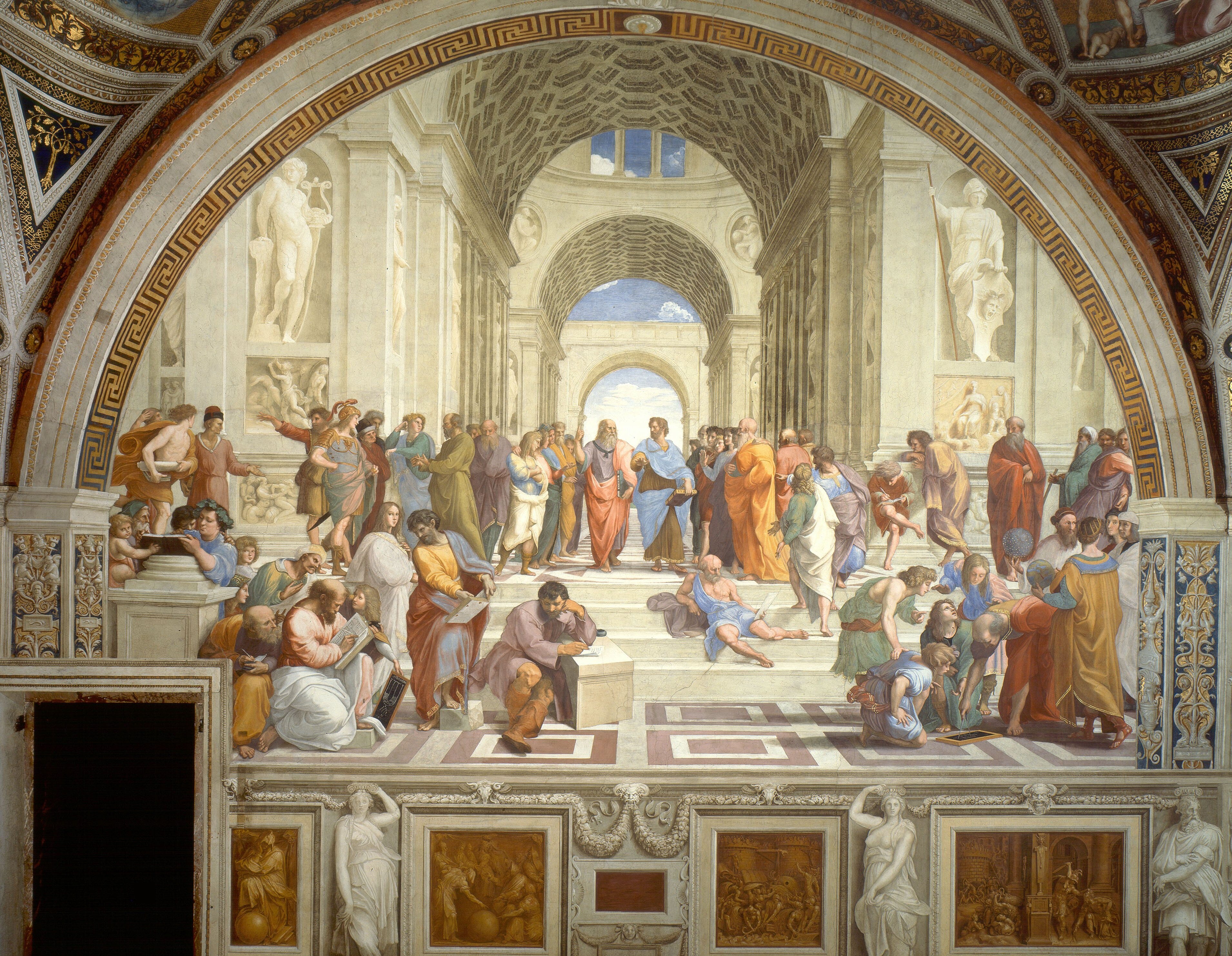
Aristotle wrote in his Metaphysics that “it is owing to their wonder that men both now begin and at first began to philosophize.”1 He was not being whimsical. He was making an observation about human nature. The impulse to understand the world, to never tire of asking why. This drive to know and understand does not begin with duty or ambition. It begins with wonder.
Plato said it earlier than Aristotle and more simply: “Wonder is the feeling of a philosopher, and philosophy begins in wonder.”2
We named this Substack Virtue and Wonder because those two words contain everything we believe about education, about childhood, and about what we owe the next generation. They are the reason Chapter House exists. They are why we publish the books we publish, homeschool the way we homeschool, and spend our evenings reading aloud to children who would sometimes rather be doing anything else. If you are going to follow along with us here, you deserve to know what we mean by them.
Philosophy Begins in Wonder
We have watched wonder work in our own living room.
Wonder is the spark that lights everything else. Strip it away and you are left with something that barely qualifies as education at all. A child who never wonders will never truly learn, because learning requires the admission that there is something out there worth knowing, something larger than yourself that demands your attention. Without wonder, education is just compliance: Sit down, memorize this, pass the test, move on. With wonder, education becomes what it was always supposed to be. The opening of a mind to the fullness of the world.
The Case for Virtue
But wonder alone is not enough. A man can wonder at the stars and do nothing about it. He can be moved by a beautiful story and remain unchanged. Wonder opens the eyes. Virtue is what moves the feet.
The great authorities of the past agree on this point with a consistency that ought to give us pause. Aristotle wrote that “the good of man is the active exercise of his soul’s faculties in conformity with excellence or virtue.”3 Marcus Aurelius, who governed the Roman Empire with a philosopher’s discipline, wrote in his journal: “Waste no more time arguing what a good man should be. Be one.”4 These were not soft men offering gentle suggestions. They were describing the organizing principle of a well-lived life.
The founders of the United States understood this as well as anyone. In 1787, Benjamin Franklin wrote, “Only a virtuous people are capable of freedom. As nations become corrupt and vicious, they have more need of masters.”5 John Adams, eleven years later, wrote that “our Constitution was made only for a moral and religious People. It is wholly inadequate to the government of any other.”6 These were not pious sentiments tacked onto a political project. They were structural assessments. The American experiment was designed to be operated by virtuous citizens, and without virtue, the machinery breaks down.
The emphasis on virtue is not limited to the West. Confucius taught that “the Superior Man cares about virtue; the inferior man cares about material things.”7 Across civilizations and centuries, the conviction recurs: A people without virtue cannot sustain anything worth sustaining.
St. John Chrysostom, a fourth-century Church Father, went further than most. He likened the failure to teach children virtue to a kind of murder: “I am speaking of the concern for educating children’s hearts in virtues and piety, a sacred duty which cannot be transgressed without thereby becoming guilty of the children’s murder, in a certain sense.”8 That is strong language. He meant it to be. Chrysostom understood that a child raised without virtue is a child sent into the world unarmed, and the parent who fails to arm him bears the responsibility.
He also had pointed words for parents who confuse prosperity with formation: “Strive not to make them rich, but rather to make them pious masters of their passions, rich in virtues.”
We Are Not Writing From a Pedestal
If we are going to talk about virtue, we had better not pretend to have mastered it.
We have not.
The gap between what we want to model and what we actually model on any given Tuesday is, frankly, embarrassing.
We say this not as false modesty but because the entire tradition we are drawing from insists on it. The great figures of Western civilization were not great because they were flawless. Abraham lied about his wife out of fear. David committed adultery and murder. Peter denied Christ three times before the rooster crowed. Achilles sulked by his ships while his comrades died in battle. Columbus was cruel, even by the standards of his time. Washington owned slaves. Every figure held up as a model of virtue had deep and sometimes terrible flaws.
But here is what made them worth remembering: They aspired. They oriented their lives toward the good, however imperfectly, and that orientation produced something real. Abraham became the father of nations. David gave us the Psalms. Washington became a cornerstone of American ideology. The aspiration itself shaped them, even when they fell short of it.
That is what we want for our children. Not perfection. We cannot give them perfection because we do not have it. What we can give them is a vision of the good and the beautiful, the stories that carry it, and the daily witness of two parents who are trying, failing, confessing it, and getting back up. We believe that is enough. It has to be, because it is all any parent has ever had.
These flawed heroes teach something our children need to hear: Virtue is not a destination but a direction. You do not arrive at courage. You practice it, badly and often, until it becomes part of you. The same is true of patience, of honesty, of temperance, of every virtue worth naming. Our children do not need perfect parents. They need parents who are honest about the gap between who they are and who they ought to be, and who keep walking toward the good anyway.
The Engine of Mankind
Virtue without wonder is grim duty. It is the child who behaves because he fears punishment, not because he loves the good. That kind of virtue is brittle. It cracks under pressure.
But virtue fueled by wonder is something else entirely. That is the child who reads about Odysseus and wants to be brave. The child who hears about St. George and wants to fight dragons. The child who sees a sunset and feels, without being able to articulate it, that the world is full of something worth protecting.
Wonder gives virtue its warmth. It transforms obligation into desire. A child who wonders at the beauty of creation does not need to be lectured about stewardship. A child who is amazed by the courage of a hero does not need to be told to be brave. The wonder does the teaching. The story carries the lesson in its bones, and the child absorbs it the way he absorbs sunlight.
This is why we believe so deeply in the old stories. They are the most proven method for transmitting virtue through wonder that the world has ever produced. Æsop’s fables have been teaching children about human nature for twenty-six centuries. Greek mythology opened the door to awe long before anyone thought to write a curriculum around it. Beowulf, King Arthur, Robin Hood, Odysseus: These characters have been shaping the moral imaginations of children since before the printing press existed, and they still work. Children just need to be introduced to the stories, and they will do the work.
C. S. Lewis understood this: “Since it is so likely that they will meet cruel enemies, let them at least have heard of brave knights and heroic courage. Otherwise you are making their destiny not brighter but darker.”9
We are not trying to make our children’s destiny darker. We suspect you are not either. That is why you are here.
Dr. John Senior, in The Death of Christian Culture, described what happens when a civilization stops passing down its highest aspirations:
But do we want to go so far as to have a merely technical civilization? A hundred years after the great revolution in our culture, we might question the “too great place” of science. So many are shocked today to find their children lacking religious motivations, lacking patriotism, lacking even a very clear sense of moral responsibility. They fail to realize that these virtues are in great part culturally determined. We have lived on cultural capital from a past generation, having failed to counteract depletion.10
We are living in the depletion Senior warned about. The cultural capital is nearly spent. And the only way to counteract it is to start planting again.
Virtue, fueled by wonder, is the engine of mankind. It built every great cathedral, inspired every great conquest, and charted every new frontier. Without it, we are technicians in a ruin, skilled but purposeless, efficient but hollow. With it, even the most ordinary family in the most ordinary house can participate in something that stretches back to the beginning and forward beyond what we can see.
What This Substack Is About
Chapter House publishes books. Beautiful editions of the great old stories that shaped Western civilization, paired with pamphlet essays that explain why those stories matter and how to use them with your children. That is what we sell, and we are not ashamed of it.
Virtue and Wonder is something different. This Substack is where we think out loud about the ideas behind what we do. It is where we make the case for classical style education, for reading aloud, for the Western Canon, for old books over new ones, for virtue over mere achievement, and for wonder over mere efficiency.
Some of what we write here will be practical. How to read aloud to children of different ages. How to handle a reluctant reader. Which books to start with and why. Some of it will be more philosophical. Why pagan mythology has a place in a Christian home. Why cultural literacy matters more than standardized test scores. Why the purpose of education is the formation of the soul, not the preparation of an employee.
All of it will be honest. We are two parents in rural Tennessee with three children, a small publishing company, and a conviction that the old books still matter, and they still work. We are not academics. We are not experts in any credentialed sense. We are people who read to our kids every night and have seen what happens when the right story lands in the right soul at the right time.
We are also people who fail at this regularly and are trying anyway. If that sounds like you, you are in the right place.
An Invitation
Chrysostom told parents to stop worrying about leaving their children money and start worrying about leaving them virtue. “Your children will always be sufficiently wealthy,” he wrote, “if they receive from you a good upbringing that is able to order their moral life and behavior.”11
We are trying to give our children a good upbringing. We fail at it more than we would like. But every evening we sit down and open a book, we are planting something. A seed of wonder. A glimpse of virtue. A story that will outlast us and, God willing, shape our children into something better than we are.
That is the whole idea. Virtue and wonder. The rest is just picking up a book and reading it to your children.
Virtus et Miraculum,
Josh and Hannah
Aristotle, Metaphysics, Book I, Part 2 (c. 350 BC), translated by W. D. Ross.↩︎
Plato, Theaetetus, 155d (c. 369 BC), translated by Benjamin Jowett.↩︎
Aristotle, Nicomachean Ethics, Book I, Chapter 7, 1098a16 (c. 340 BC), translated by H. Rackham (Loeb Classical Library).↩︎
Marcus Aurelius, Meditations, Book X, Section 16 (c. 170-180 AD), translated by Maxwell Staniforth (Penguin Classics, 1964).↩︎
Benjamin Franklin, letter to the Abbés Chalut and Arnoux, April 17, 1787. Published in The Writings of Benjamin Franklin, edited by Albert Henry Smyth, vol. 9 (New York: Macmillan, 1906).↩︎
John Adams, letter to the Officers of the First Brigade of the Third Division of the Militia of Massachusetts, October 11, 1798. Published in The Works of John Adams, edited by Charles Francis Adams, vol. 9 (Boston: Little, Brown, 1854).↩︎
Confucius, The Analects, Book IV, Chapter 11, translated by A. Charles Muller.↩︎
St. John Chrysostom, An Address on Vainglory and the Right Way for Parents to Bring Up Their Children (c. 390 AD). See M. L. W. Laistner, Christianity and Pagan Culture in the Later Roman Empire (Ithaca: Cornell University Press, 1951).↩︎↩︎
C. S. Lewis, “On Three Ways of Writing for Children” (1952), originally delivered as a lecture to the Library Association and later collected in Of Other Worlds: Essays and Stories (1966).↩︎
Dr. John Senior, The Death of Christian Culture (New Rochelle, NY: Arlington House, 1978), Chapter V: “The Emperor’s New Literature.”↩︎
St. John Chrysostom, Homilies on Ephesians, Homily XXI.↩︎