

The Book That Made Abraham Lincoln
How a borrowed biography of Washington shaped the boy who saved the Union


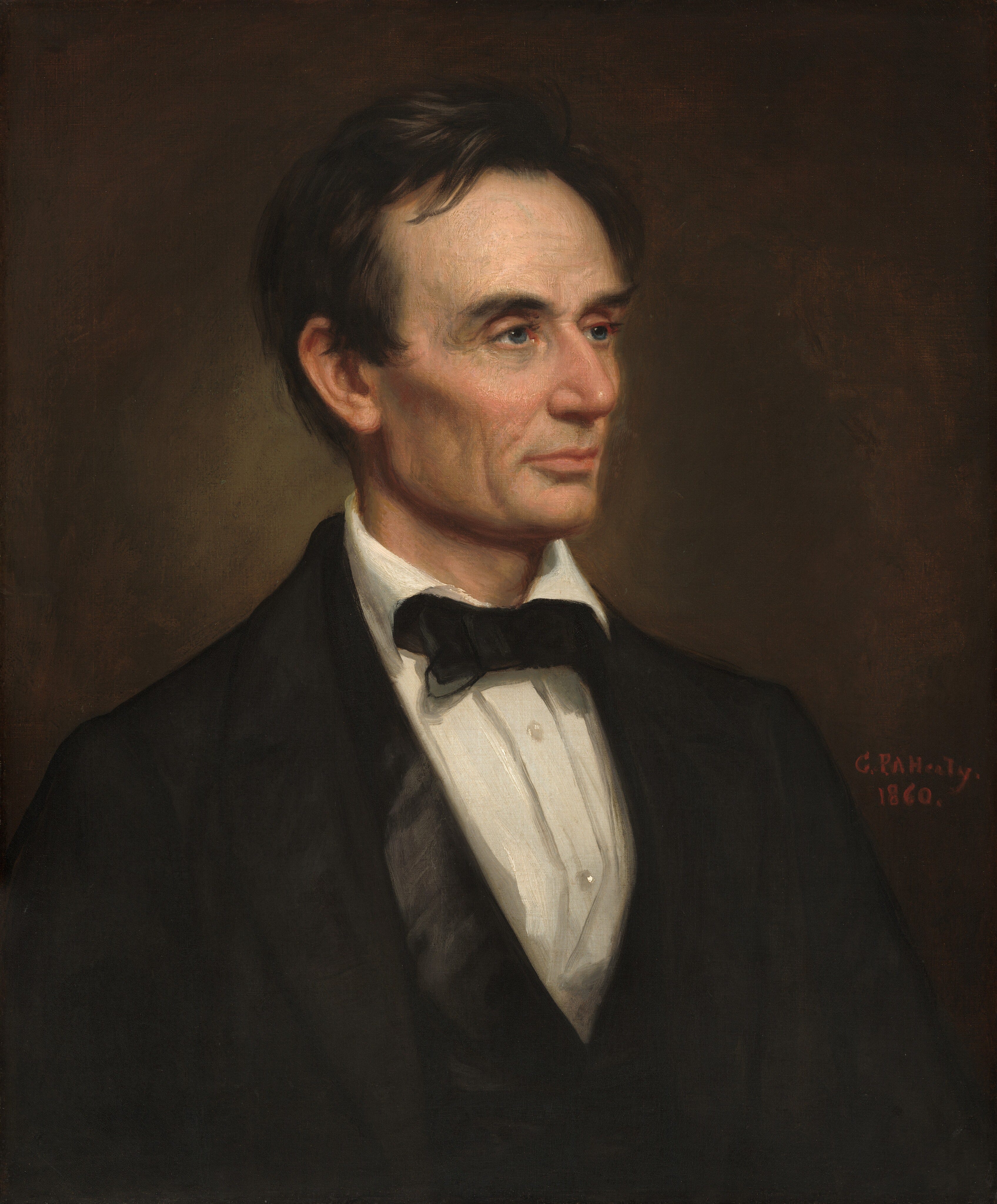
On a winter day in 1800, a 40-year-old clergyman sat down to write a letter that would alter the course of American history. His name was Mason Locke Weems.1 He had just learned that George Washington, the nation’s first president, had died. And Weems saw an opportunity.
“Washington you know is gone!” he wrote to his publisher.2 “Millions are gaping to read something about him... My plan! I give his history, sufficiently minute... I then go on to show that his unparalleled rise and elevation were due to his Great Virtues.”
This was not a promise to write history as a scholar might. This was a mission. Weems understood something that many in his profession did not: People do not simply want facts about great men. They want to understand how greatness happens. They want to see the invisible architecture of character that holds up the visible monuments of achievement. And they will read the most ordinary book to get it, if that book tells a story worth reading.
Weems was an Episcopal minister and an itinerant book peddler. He traveled the roads of the early republic with his books, selling to whoever would buy and giving to whoever could not. He was not a scholar. He was not chasing fame or money, though he wanted both. What drove him was a conviction that ordinary people deserved access to stories that could make them better.
Weems published The Life of Washington in 18003 (subsequent editions followed). It became one of the most widely read books in America. Schoolchildren memorized passages. Families kept copies on parlor tables. Merchants displayed it in shop windows. We know it today largely through one story that Weems included: Young George Washington, having taken a hatchet to his father’s cherry tree, is confronted by his father and confesses: “I can’t tell a lie, Pa; I did cut it with my hatchet.” His father, overcome with joy at the boy’s honesty, embraces him. The story was almost certainly invented. But that is beside the point.
What mattered was the architecture. Weems had built a book that showed Washington not as an abstract historical figure, but as a man whose greatness had sprung from concrete, teachable virtues: Honesty, courage, self-discipline, devotion to something larger than himself. Any child could understand these things. Any child could imagine imitating them.
The Boy in the Log Cabin
Among those children was a boy born in a Kentucky log cabin in 1809.4 His name was Abraham Lincoln. His parents were poor and barely educated. His father, Thomas, could barely sign his name.5 His mother, Nancy Hanks, had no formal schooling but could read the Bible, and she taught young Abraham his letters before her death in 1818. By Lincoln’s own estimate, he received less than a year of formal education in his entire childhood.6
He had no library to speak of. He had no mentor. He had almost nothing except the frontier and his own hunger to learn.
And yet he read. Lincoln read everything he could find. He borrowed books from neighbors and walked miles to retrieve them. He studied by firelight and candlelight. He read Æsop’s Fables and the Bible and Pilgrim’s Progress. And at some point in his childhood, exact dates lost to history, a neighbor loaned him a copy of Weems’ Life of Washington.7
Lincoln became enthralled. He read it by whatever light he could find. The stories fixed themselves in his mind with the vividness that only childhood reading possesses. He did not read passively. He read as a boy reads when he has no other escape from poverty, no other access to a world beyond his immediate circumstance. He read as though Washington’s life might teach him something about his own.
The book was damaged, a detail that matters because it tells us something about how deeply he had engaged with it. When the owner of the book demanded compensation, young Lincoln worked to pay for the damage.8 He labored to repay the value of borrowed words about a dead president. That is the kind of boy who becomes Abraham Lincoln.
Forty Years Later
In February 1861,9 the adult Lincoln was president-elect. He traveled to Trenton, New Jersey, to address the New Jersey Senate on his way to his inauguration. The war that would define his presidency had not yet begun. The great questions that would consume his life were still mostly unformed.
Yet he chose to speak about Weems’ book.
May I be pardoned if, upon this occasion, I mention that away back in my childhood, the earliest days of my being able to read, I got hold of a small book, such a one as few of the younger members have ever seen, Weems’s Life of Washington. I remember all the accounts there given of the battlefields and struggles for the liberties of the country, and none fixed themselves upon my imagination so deeply as the struggle here at Trenton, New Jersey. The crossing of the river; the contest with the Hessians; the great hardships endured at that time, all fixed themselves on my memory more than any single revolutionary event; and you all know, for you have all been boys, how these early impressions last longer than any others. I recollect thinking then, boy even though I was, that there must have been something more than common that those men struggled for.
Here is the chain we must see. Weems wrote a book about Washington’s virtues. Lincoln, a poor boy with almost no access to education, borrowed it from a neighbor. The book entered his imagination and stayed there for forty years. That impression shaped how Lincoln thought about greatness, about sacrifice, about the meaning of the American project itself. And when the time came for Lincoln to lead the nation through its greatest crisis, he did so with a character forged partly in the light of stories he had read as a boy on the frontier.
Did the Cherry Tree Matter?
Does the cherry tree story matter? Does historical accuracy matter if the moral framework holds true?
These are fair questions. But consider what Weems understood that we sometimes forget: History is not primarily for historians. History is for people. Stories are how we pass understanding from one generation to the next. The story does not have to be perfectly true to be true in the way that matters most in the way that shapes how a child learns to think about virtue, about courage, and about what is worth fighting for.
The Chain Continues
A generation after Weems, an educator named James Baldwin compiled Fifty Famous Stories Retold in 1896.10 Many of those stories came directly from Weems and from similar sources. The book became standard reading for American schoolchildren for generations. Chapter House publishes this book as part of our Chapter I box set. The stories were designed to do exactly what Weems intended: To show young readers that greatness comes from character, and that character is not born. It is chosen, daily, in small and large ways.
Think about the actual mechanics of it. A child reads a story. The story enters the child’s mind and takes up residence there. Years pass. Decades pass. The child becomes an adult, becomes a leader. And when that leader faces the greatest crisis of their time, they reach back into memory and find that story still there, still luminous, still teaching them something about how to live.
This is not mystical. It is how human beings actually work. We are shaped by what we read, particularly when we are young and our minds are still soft enough to be truly shaped. The books we encounter early become part of how we think and who we are.
Lincoln did not become president because he read Weems’ Washington. That is too simple. But Lincoln became the kind of president he was partly because, as a boy, he had read about Washington. The book itself did not make him great. Rather, it showed him what greatness looked like. It whispered to him across the distance of childhood that there was another life possible, another way to live, another thing to aspire to.
That is the power of story. That is what Weems understood and what the best teachers have always understood. The books you put in a child’s hands are not mere entertainment or decoration. They change the shape of the mind that receives them. They become part of how that mind, decades later, solves the problems that fate presents.
The Next Link
We are parents. We care about our children’s education, character, and futures. We read to them. We worry about which books they read. We want them to be good and to do well. These worries are not separate; they are the same worry. The books that shape character are the same books that, over a lifetime, create the conditions for doing good in the world.
Maybe the book you read to your child tonight will lodge itself in their mind the way Weems’ Washington lodged itself in Lincoln’s. Maybe it will wake something in them: A vision of what is possible, a quiet conviction that ordinary people can do extraordinary things. You will not know. You cannot know. But the possibility is there, and it is real. Weems knew it. Lincoln proved it.
The chain is not broken. It is still passing forward. The next link depends on what we choose to put in the hands of the children we love.
Mason Locke Weems (October 11, 1759 – May 23, 1825) was an American Episcopal minister and itinerant book peddler. He was a prolific author and worked for over 31 years as a traveling book salesman for publisher Mathew Carey of Philadelphia. Mason Locke Weems Wikipedia; Weems, Mason Locke Britannica.
In January 1800, a month after George Washington’s death on December 14, 1799, Weems wrote to his publisher Mathew Carey expressing his plan to publish a biography of Washington. The letter includes the phrase “Washington you know is gone! Millions are gaping to read something about him” and describes his intention to show that Washington’s “unparalleled rise & elevation were due to his Great Virtues.” Later that year, Mathew Carey published the work. In Defense of Parson Weems Virginia Living Magazine; American Heritage Magazine: “The Legend Maker” February 1962.
The first edition of Weems’s biography of Washington, titled “A History of the Life and Death, Virtues and Exploits of General George Washington,” was published by Mathew Carey in 1800. The work went through numerous editions during Weems’s lifetime (estimated at about seventy editions). The fifth edition, published in 1806, introduced the famous but apocryphal story of young Washington and the cherry tree. The Life of Washington Harvard University Press.
Abraham Lincoln was born on February 12, 1809, in a log cabin on Sinking Spring Farm in Hardin County (now LaRue County), Kentucky. The family later moved to Knob Creek in Kentucky, then to Indiana in 1816. Abraham Lincoln Birthplace National Historical Park Wikipedia; Today in History - February 12 Library of Congress.
Thomas Lincoln, Abraham’s father, was largely illiterate or could barely read. Nancy Hanks Lincoln, Abraham’s mother (1784-1818), had no formal education but could read the Bible. However, Nancy stressed the importance of learning and reading to her son. She taught young Abraham his letters and was credited by Lincoln himself as the primary influence on his intellectual development. Thomas Lincoln Wikipedia; Nancy Lincoln Wikipedia; The Two Mothers Who Molded Lincoln History.com.
Lincoln wrote in his 1860 autobiography for Jesse Fell that “the aggregate of all his schooling did not amount to one year.” Some secondary sources estimate up to eighteen months. Despite this minimal formal education, Lincoln compensated through voracious self-education, particularly through reading. Young Lincoln Library of Congress Exhibition; Early life and career of Abraham Lincoln Wikipedia.
Lincoln borrowed Weems’s “Life of Washington” from his neighbor Josiah Crawford. When rain damaged the book, Lincoln worked in the Crawford’s fields (”pulled fodder”) for approximately three days to pay for the damage. This book made a profound impression on young Lincoln. Josiah Crawford Lincoln Financial Foundation Collection; Washington and Lincoln: The Weems Connection Presidential History Blog.
According to historical accounts, Lincoln worked in the Crawford fields for about three days (often described as “pulling fodder”) to pay for water damage to Weems’s “Life of Washington” that he had borrowed. The Life of Abraham Lincoln - Chapter III Henry Ketcham; American Heritage Magazine: “There I Grew Up” October 1966.
On February 21, 1861, President-elect Abraham Lincoln addressed the New Jersey Senate in Trenton on his way to his inauguration. In this speech, Lincoln recalled reading Weems’s “Life of Washington” as a child and how the account of the Battle of Trenton had particularly impressed him, claiming it had “fixed themselves upon my imagination so deeply as the struggle here at Trenton, New Jersey” more than any other Revolutionary War event. The full text of his speech can be found in the Collected Works of Abraham Lincoln. Abraham Lincoln’s Addresses at the New Jersey Statehouse Abraham Lincoln Online; Address to New Jersey Senate (February 21, 1861) House Divided Project.
James Baldwin (1841-1925) was an American educator and prolific author of school books. He published “Fifty Famous Stories Retold” in 1896 with the American Book Company. The collection presents well-known stories from history, folklore, and legend intended to instill moral lessons in young readers. Many of the stories in Baldwin’s collection drew from earlier sources, including stories popularized by Weems. The book remained popular for generations and went through multiple editions.