

The American Story Begins in Britain
And what we lose when we stop telling it


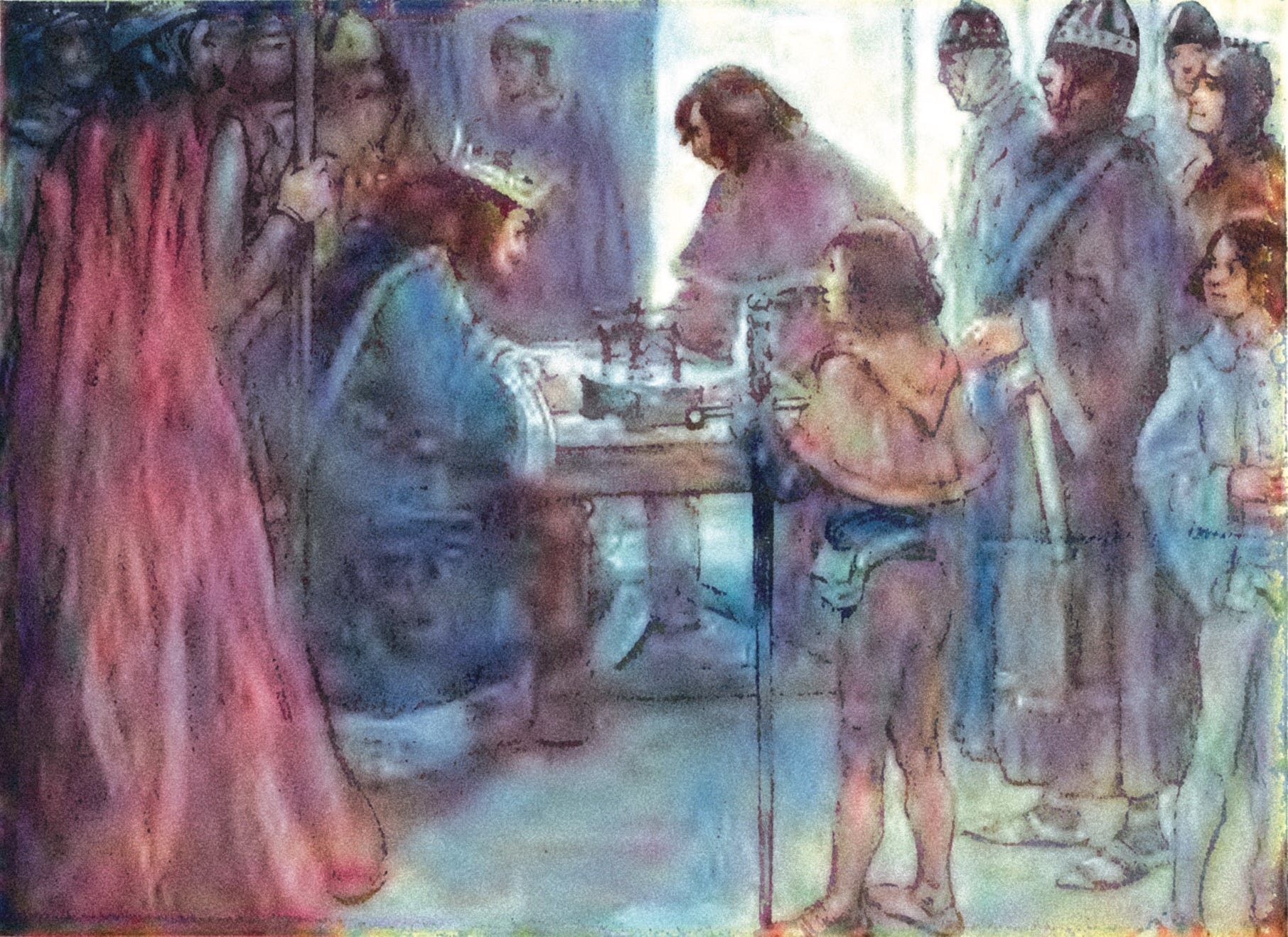
H. E. Marshall’s Our Island Story begins with a father receiving a letter. He reads it, looks at his children, and says, “This is from home.”
He is speaking of Britain. He left it behind. But the letter pulls him back, and he begins to tell his children the story of the island that shaped him. That is how Marshall’s history of England opens: Not with a date, not with a treaty, but with a father who cannot stop belonging to the place he left.
We Americans have a harder time admitting this. Our national story begins with a rejection of Britain. We threw the tea in the harbor, we fought the redcoats, we declared our independence. All true. But we did not spring from nowhere. The original thirteen colonies that banded together to create America were British colonies. The founding fathers were British subjects before they were revolutionaries. The de facto language of America is English. We should not shun this heritage in favor of political correctness.
The question Marshall’s opening raises is a live one: What belongs to an American child from the history of Britain? The answer is: Nearly all of it.
A People Need Their Myths
Marshall understood something that many modern historians have forgotten: A people need their myths as much as their facts.
Like Vergil, who gave Rome a shared heritage with Troy by tracing its founding to Aeneas, Marshall gave Britain a claim to the ancient world. She begins her history with Neptune and Amphitrite giving the island of Britain to their son Albion on his coming of age. As Marshall herself wrote:
There are many facts in school histories, that seem to children to belong to lessons only. Some of these you will not find here. But you will find some stories that are not to be found in your school books, stories which wise people say are only fairy-tales and not history. But it seems to me that they are part of Our Island Story, and ought not to be forgotten, any more than those stories about which there is no doubt.1
She was right then, and she is right now. The tall tales of a culture are as important as its verifiable facts. Modern historians may scoff at Aeneas, but he was very much real to the ancient Romans. The ancient Greeks treated Achilles and Agamemnon as historical figures. The British have King Arthur. We Americans have our founding fathers, enveloped in their own mythology. We do not tell the story of George Washington and the cherry tree because it happened. We tell it because a young Abraham Lincoln read it in a book, believed it, and was formed by it.2
History is ultimately the stories we tell ourselves. Every great people has its own. When we stop telling them, the bonds that hold a people together across time begin to fray.
From Runnymede to Philadelphia
The line from Magna Carta to the Declaration of Independence is not a straight one, but it is a real one.
In 1215, English barons trapped King John on an island and forced him to sign a charter of liberties. Marshall tells this story with the excitement it deserves. The document established that no one, not even the king, is above the law. That principle, hammered out on a muddy field at Runnymede, is the same principle the American colonists invoked five and a half centuries later when they declared that governments derive their just powers from the consent of the governed.
You cannot understand the American Revolution without understanding what the colonists believed they were defending: Ancient English liberties, hard won over centuries, which they feared Parliament was stripping away. They were not inventing something new. They were preserving something old.
James Baldwin understood this. His Fifty Famous Stories Retold (1896) moves fluidly between British and American figures precisely because they belong to the same story. King Alfred and the Cakes, King Canute on the Seashore, the story of Robin Hood, and Sir Philip Sidney sit alongside George Washington and His Hatchet and Pocahontas. Baldwin, who served as the superintendent of Indiana’s school system for eighteen years, recognized what many educators have since forgotten: These stories are not discrete artifacts belonging to separate nations. They form a continuous narrative. The British stories are the prologue to the American ones.3
What Our Children Do Not Know
A child who does not know where he comes from does not know who he is. Our children are growing up strangers to their own story.
They may know how to code, but they cannot tell you why the Magna Carta mattered. They cannot tell you what Sir Philip Sidney meant when he offered his water to a dying soldier on the battlefield at Zutphen. They cannot tell you what it means that a king once stood on the seashore and commanded the tide to stop, only to show his flattering courtiers that even a king has limits.4
These are not trivia. They are the moral vocabulary of a civilization. When Sidney handed his water to another man and said, “Thy necessity is yet greater than mine,” he was expressing a conviction that the strong serve the weak, that rank confers obligation, that a gentleman measures himself by what he gives away.5 When Canute set his throne on the beach and let the tide wash over his feet, he was teaching his people that earthly power has limits, and that the man who forgets this has forgotten God.
Our children do not know these stories. The loss is not merely academic. It is spiritual. A nation that forgets its stories forgets its reasons for being.
The Depletion of Cultural Capital
Dr. John Senior wrote in The Death of Christian Culture: “We have lived on cultural capital from a past generation, having failed to counteract depletion.”6
The capital he described is not money. It is memory. It is the accumulated wisdom, courage, and virtue of the generations that came before us, preserved not in databases but in stories. When we stop telling our children the stories of Britain, from the mythological founding of Albion to the barons at Runnymede to the empire that carried the English language across the world, we are drawing down that capital without making a deposit.
Marshall’s Our Island Story tells the tale of Great Britain from its beginnings to the First World War. When you read her account of the British overcoming their Roman overlords, or how they trapped King John until he agreed to the Magna Carta, you are reading your own story. As the Chapter IV guide in our collection puts it: “If you’re British, this is your story. If you’re American, this is your story. If you’re Canadian, this is your story. If you’re of one of any number of nations founded by the British empire, this is your story, too.”
The stories we tell our children about the English-speaking world are how we make that deposit. Our Island Story, Fifty Famous Stories Retold, the Anglo-Saxon epic of Beowulf, Tales from Shakespeare: These are not artifacts of a foreign country. They are the shared inheritance of every English-speaking people, and they belong to our children.
The question is whether we will keep telling them.
Our Island Story and Fifty Famous Stories Retold are available in the Chapter House collection. Chapter I includes Baldwin’s Fifty Famous Stories Retold, and Chapter IV includes Marshall’s Our Island Story.
H. E. Marshall, Our Island Story: A History of England for Boys and Girls (London: T. C. & E. C. Jack, 1905), “How This Book Came to Be Written.”
Mason Locke Weems, The Life and Memorable Actions of George Washington (5th ed., 1806). For the Lincoln connection, see Carl Sandburg, Abraham Lincoln: The Prairie Years (New York: Harcourt, Brace & Company, 1926), 1:34-35.
James Baldwin, Fifty Famous Stories Retold (New York: American Book Company, 1896). Baldwin served as superintendent of Indiana’s school system from 1883 to 1901.
Baldwin, “King Canute on the Seashore,” in Fifty Famous Stories Retold, 11-12.
Sir Philip Sidney (1554-1586) was mortally wounded at the Battle of Zutphen. The story of Sidney giving his water to another wounded soldier appears in Fulke Greville, The Life of the Renowned Sir Philip Sidney (London, 1652).
John Senior, The Death of Christian Culture (Hutchinson, KS: Pecos Press, 1978), 18.
Agreed. Last year on the anniversary of the Magna Carta, we held a medieval feast and "signed" a printout of it. (With wax seals, the way John did.) This year, we'll reenact the signing of the Declaration.
Exactly why AmblesideOnline.org begins with AIS in year 1... though the founders are American and Canadian.