

Texas Was Right to Put the Bible Back in the Classroom
Two friendly reservations: There should be more of it, and it ought to be the King James.


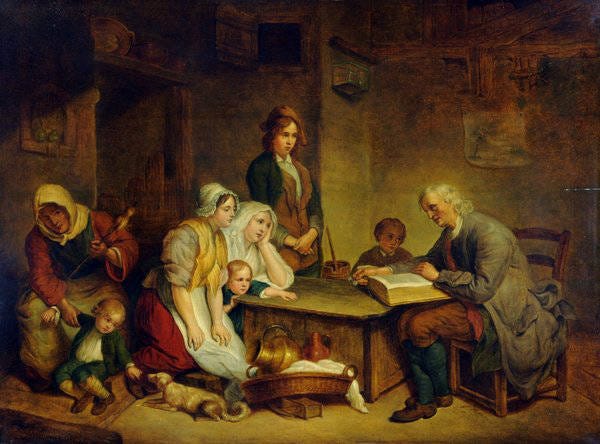
Last Friday, the Texas State Board of Education voted 9 to 5, with one abstention, to fold passages from the Bible into the required reading list for the state’s public schools.1 The list runs from kindergarten through the senior year of high school; it will touch more than five million children, and it begins taking effect in 2030, phased in by grade rather than all at once.2
We think this is, on the whole, good news, though we have a few reservations as well.
Why the Bible Belongs on a Reading List
Set aside, for a moment, the question of faith. We are a Christian household, and we read the Bible as Scripture, but that is irrelevant here. The argument we want to make is simpler, and it ought to persuade the believer and the atheist alike: You cannot read English literature with any depth if you do not know the Bible.
Consider how much of ordinary speech is borrowed from it. We call a traitor a Judas. We say a man sold his birthright for a bowl of pottage, that he saw the writing on the wall, that he carries a thorn in the flesh, that one loss or another is a drop in the bucket, that we had better not cross the powers that be.
Every one of those phrases walks straight out of the King James Version (KJV) and into the mouths of people who have never opened it. The linguist David Crystal, who went through the translation expression by expression, counted two hundred and fifty-seven of them, more than English owes to any other single source, Shakespeare included.3 A child who does not know where they come from is reading his own language at a disadvantage, like a guest who laughs a beat late at every joke because he does not quite get the reference.
The disadvantage compounds when the child grows up and meets real literature. Moby-Dick opens with a man named after a Genesis exile and closes on a line from the Book of Job. Lincoln’s “House Divided” is a line from the Gospels. The same root feeds Faulkner, Hawthorne, Dostoevsky, Milton, Bunyan, and the whole of medieval and Renaissance art. Close the Bible, and half the Western canon turns into a locked room.
This is not a partisan observation, and it is worth noting who else has made it. Richard Dawkins, who has spent a good portion of his career arguing against the truth of the Bible, has been just as insistent on its literary necessity. He gave over a section of The God Delusion to the phrases English owes to the 1611 translation, and in a 2012 essay he wrote that a native English speaker who has never read a word of the KJV is “verging on the barbarian.”4 When the village atheist and the village priest agree on something, it is usually worth listening.
We have made this case before, at greater length, in the guides that accompany our Chapter House box sets. We are glad to find the State of Texas arriving at the same conclusion.
But Is This Not Establishing a Religion?
It is a fair question, and it deserves a real answer rather than a culture-war reflex in either direction.
The short answer is no, and the Supreme Court settled the matter more than sixty years ago. In Abington School District v. Schempp (1963), the same decision that struck down devotional Bible reading in public schools, the Court was careful to say that studying the Bible for its literary and historic qualities, presented objectively as part of a secular program of education, is entirely consistent with the First Amendment.5 Teaching a child what the Beatitudes are is not the same act as leading him in prayer. One is instruction, the other is worship. A teacher can do the first without ever touching the second.
There is a second reason this is not the establishment of a sect, and it is the one we find most persuasive. Look at the texts the board actually chose, such as the Twenty-third Psalm, the Beatitudes, the parable of the Prodigal Son, the story of Adam and Eve. These are not the disputed property of one denomination. The Catholic and the Baptist, the Orthodox and the Methodist, all read the Twenty-third Psalm, and all mean the same thing by it. To teach these passages is not to take a side in any quarrel between Christians, much less to impose a creed on the unbelieving. It is to hand a child the common inheritance.
We would extend the same courtesy in reverse, and so, it turns out, does the list itself. The very same reading list has third graders studying Icarus, King Midas, and Hercules, and has the youngest children hearing a Choctaw story of how the spider brought fire. No one accuses Texas of establishing the religion of Olympus or of catechizing six-year-olds into Choctaw cosmology. These are taught as literature, as the headwaters of stories we have told ever since. The Bible can be taught the same way, and in Texas, it now will be.
First Reservation: There Should Be More
Here is where our enthusiasm cools a little.
When you read past the headlines and look at the list itself, the Bible’s presence turns out to be thinner than the coverage suggests. In most grades, it appears not as a text in its own right but as a short companion reading hung on the side of something else: The Book of Job attached to The Inferno, the Beatitudes tucked in beside The Outsiders, the Prodigal Son riding along behind Great Expectations. A verse here. An excerpt there.
In the youngest grades, the Bible arrives as a few picture-book retellings: Noah’s Ark, David and Goliath, Daniel in the lion’s den. Beyond those, the actual scripture across thirteen years of schooling comes to something like this:
Genesis (Adam and Eve)
Exodus (the burning bush, the parting of the sea)
Psalm 23
Ecclesiastes 3
The Book of Job (in excerpts)
Lamentations 3
Matthew (the Beatitudes, the Sermon on the Mount)
Luke (the Prodigal Son, a passage on humility)
1 Corinthians 13
That is a respectable survey, but it is a survey conducted at a sprint. A student cannot understand Paradise Lost from two chapters of Genesis, nor grasp the shape of the Gospels from the Beatitudes alone. The Bible is not a book of detached quotations to be sampled. It is a story, the longest and most consequential story in our civilization, and it merits being read as one.
In our own home and in our guides, the minimum books we recommend for cultural literacy are Genesis and Exodus, the four Gospels, then Psalms, Proverbs, and Ecclesiastes, and for older students Job, Isaiah, and Romans, with Revelation approached carefully and last. That is more than Texas has asked for. We do not say this to scold the board, which has done a brave and largely correct thing. We say it because a half measure invites the worst of both worlds: Enough Bible to draw the lawsuits, not enough to do the child much good.
Second Reservation: Use the King James
This is the reservation we feel the most strongly about, and it is also the easiest to fix, because it costs nothing.
The required list does not settle on a single translation. The KJV appears in only a handful of places: The Twenty-third Psalm, the Beatitudes in Matthew, and the third chapter of Ecclesiastes.6
Everywhere else, the scripture is drawn from modern translations: The New International Reader’s Version (NIRV) for Genesis, Exodus, and Job, the English Standard Version (ESV) for the Prodigal Son and the passage from First Corinthians.7
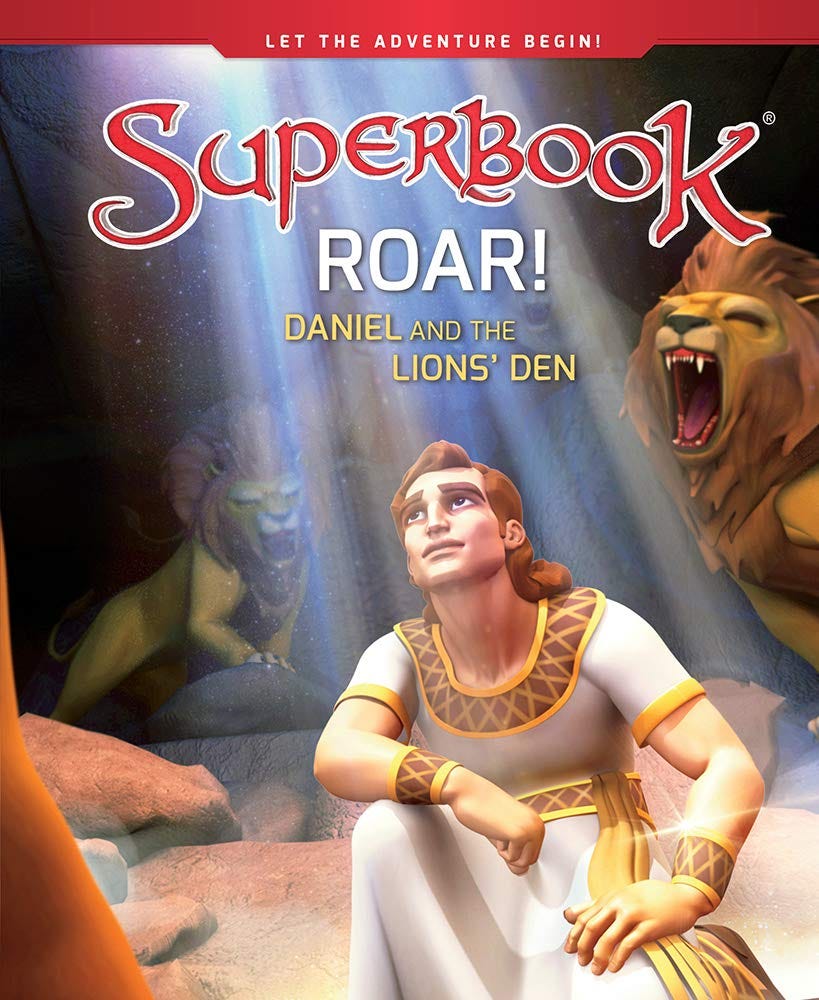
This haphazardness shows in other places too. The third-grade “Daniel and the Lion’s Den” is not a passage of scripture at all but a picture-book adaptation issued by the Christian Broadcasting Network, the television ministry founded by Pat Robertson.8 Whatever its merits as a children’s book, it is a strange thing to put on a list meant to teach the Bible’s place in our literature.
Now, the NIRV is… okay. It is written at a low reading level so that a young child or a new reader can follow the plain sense of the story, and for that purpose, it does the job. But recall the whole reason the Bible earned its place on this list was the KJV’s unrepeatable mark on the English language and on everything written in English since.
No poet ever lifted “the writing on the wall” out of the New International Reader’s Version. Melville did not cadence his prose after the ESV. The idioms, the rhythms, the half-buried allusions in Lincoln, Whitman, and Langston Hughes all run back to 1611 (or 1789). To teach the Bible’s literary influence in a modern paraphrase is rather like teaching Shakespeare’s influence in a plot summary. You will convey the events, but will lose the very thing that made them matter.
We will grant the obvious objection and then set it aside. The KJV is harder. Its grammar is four centuries old, and a young child may trip over the thees and thous at first. But a child does not need to parse those words to be shaped by them. He needs to hear them, the way he learned his own language long before he could name its parts.
Read aloud at the same hour each day, the cadences settle deeper than any paraphrase, which is the whole case we made for the five-minute read-aloud. The same holds in the classroom. When the curriculum sets a passage of scripture before a student as literature, when it puts Psalm 23 or the Beatitudes on the page to be studied, let it be the KJV.
But Who Will Teach It?
One objection remains, and it is the most serious of them: Are public school teachers equipped to teach the Bible?
Hand a hard passage of ancient scripture to a tired teacher with no training in theology, and you may expect a flat literal account, a vaguely uplifting moral, a guess at whatever the lesson is meant to be. Ancient literature works on assumptions no modern reader shares by default, and ancient sacred literature doubly so. Many teachers have never studied it. The worry is fair, and we will not pretend otherwise. And that may be a better-case scenario. There will undoubtedly be many teachers who wish to slip in their own agendas.
But look at what these same teachers are already assigned on this very list. In the high school course, the Book of Job sits as a companion reading beside Dante’s Inferno.9 Students read Hawthorne on Puritan guilt and, set right next to him, the third chapter of Genesis.
By the senior year, the list pairs Hamlet with T. S. Eliot, whose every other line is a trapdoor into something older. Not one of these can be taught well by a teacher unwilling to venture past her own certainties, and all of them are taught, every year, by ordinary teachers with ordinary training. We do not strike Dante from the course because the instructor never read Aquinas. We trust that an imperfect meeting with a great book beats no meeting at all. The standard that would keep an unprepared teacher away from Genesis would empty half the shelf sitting beside it.
The deeper matter is what we are aiming at with a child in the first place. Measured against the seminary, almost any grade-school encounter with Noah or David or Daniel will fall short. But the aim of a picture book read aloud to a seven-year-old is not exegesis, but acquaintance. We want the child to know there was a Noah and a flood, a David and a giant the same way he comes to know there was a wooden horse outside Troy, so that later, when the depth arrives, it has something to fasten to. You cannot deepen an acquaintance that was never made.
There is a quieter form of the objection that runs the other way: A parent who loves these stories should simply teach them at home and spare the schools the trouble. Teaching these texts ourselves is part of why we homeschool. But many of the five million children in Texas public schools will not have a parent waiting to read them Genesis at the kitchen table.
For them, the real choice is not between a learned teacher and a clumsy one. It is between a clumsy introduction and none at all, and a clumsy introduction can be repaired. The student who heard the story badly at eight can be set right at eighteen, because the name at least rings a bell. The student who never heard it has nothing to set right.
It is worth recalling what the absence actually looks like, because we have already lived through it. For two generations, English professors have watched students arrive at college unable to make sense of Paradise Lost, Moby-Dick, or half of Eliot, for the plain reason that no one ever handed them the book those works were built upon. That illiteracy is the finished product of the Bible’s exclusion from English class.
The honest conclusion is not to abandon the list but to mend it: A better translation, better editions, a page of plain guidance for the teacher. That is a far smaller task than raising one more generation of readers adrift in their own literature.10
What We Hope Comes Next
A people who can read the foundational book of their own civilization are harder to make strangers in their own house. That is finally what is at stake in a decision like this one, underneath the legal arguments and the press releases. Cultural literacy is not nostalgia. It is the difference between inheriting a tradition and merely living near its ruins.
Texas has taken a real step, and we are glad of it. We hope the next revision is bolder: More of the book, and the right translation of it. The Bible has survived empires. It can survive a committee. We would simply like to see the committee trust it a little more.
At Chapter House we publish restored editions of the classic literature that built the Western imagination, with educational guides to help parents teach them well. Our box sets each include a fuller essay on reading the Bible for cultural literacy.
Jim Vertuno and Jamie Stengle, “What to know about the decision to make Bible stories required reading in Texas public schools,” Associated Press, June 2026. The Republican-controlled State Board of Education approved the list on Friday; it affects more than five million public school students and begins taking effect in 2030. The 9–5 vote with one abstention was reported by Fox 4 Dallas–Fort Worth and others. See apnews.com.
Texas Education Agency, “Required Literary Works List,” 19 TAC §110.10 (elementary), §110.30 (middle grades), and §110.70 (high school English I–IV). The grade-by-grade list specifies the translation for each scripture selection; the King James Version is used for Psalm 23, the Beatitudes (Matthew 5), and Ecclesiastes 3, while the New International Reader’s Version and English Standard Version are used elsewhere.
David Crystal, Begat: The King James Bible and the English Language (Oxford University Press, 2010). Crystal counted two hundred and fifty-seven idiomatic expressions, more than from any other single literary source, Shakespeare included. He notes that many reached English through earlier translations such as William Tyndale’s, and that only a handful take a form found uniquely in the King James.
Richard Dawkins, “Why I want all our children to read the King James Bible,” The Guardian, May 19, 2012. The same point appears in a section of The God Delusion (2006), “Religious education as a part of literary culture,” which lists phrases English owes to the 1611 translation.
Abington School District v. Schempp, 374 U.S. 203 (1963). Justice Clark’s majority opinion held that objective study of the Bible as literature and history, within a secular program of education, does not offend the Establishment Clause.
Because we will be asked: We are not King James onlyists, nor do we believe, as the late Pastor Peter Ruckman taught, that the KJV is somehow more authoritative than the original texts. We are merely pointing out the fact that the KJV’s literary influence is unparalleled.
Texas Education Agency, “Required Literary Works List,” 19 TAC §110.10 (elementary), §110.30 (middle grades), and §110.70 (high school English I–IV). The grade-by-grade list specifies the translation for each scripture selection; the King James Version is used for Psalm 23, the Beatitudes (Matthew 5), and Ecclesiastes 3, while the New International Reader’s Version and English Standard Version are used elsewhere.
“Which Bible passages are in Texas’ proposed student reading list? Here’s what the sections reveal,” Religion News Service, June 19, 2026. The report notes that the third-grade “Daniel and the Lion’s Den” selection is supplied by the Christian Broadcasting Network, and that several Old Testament selections use the New International Reader’s Version. The publisher and translation details are also visible in the Texas Education Agency’s required reading list itself.
Texas Education Agency, “Required Literary Works List,” 19 TAC §110.10 (elementary), §110.30 (middle grades), and §110.70 (high school English I–IV). The grade-by-grade list specifies the translation for each scripture selection; the King James Version is used for Psalm 23, the Beatitudes (Matthew 5), and Ecclesiastes 3, while the New International Reader’s Version and English Standard Version are used elsewhere.
Or better yet, leave the system behind, pull your children out of the public school, and teach them yourself!
Thank you for your thorough, thoughtful and excellent case for the inclusion of these texts.