

Charlotte Mason and John Senior Agree: Great Books Are Not Enough
A child can be surrounded by the best books in the world only be left with a starving intellect. Here is the soil those books have to grow in.


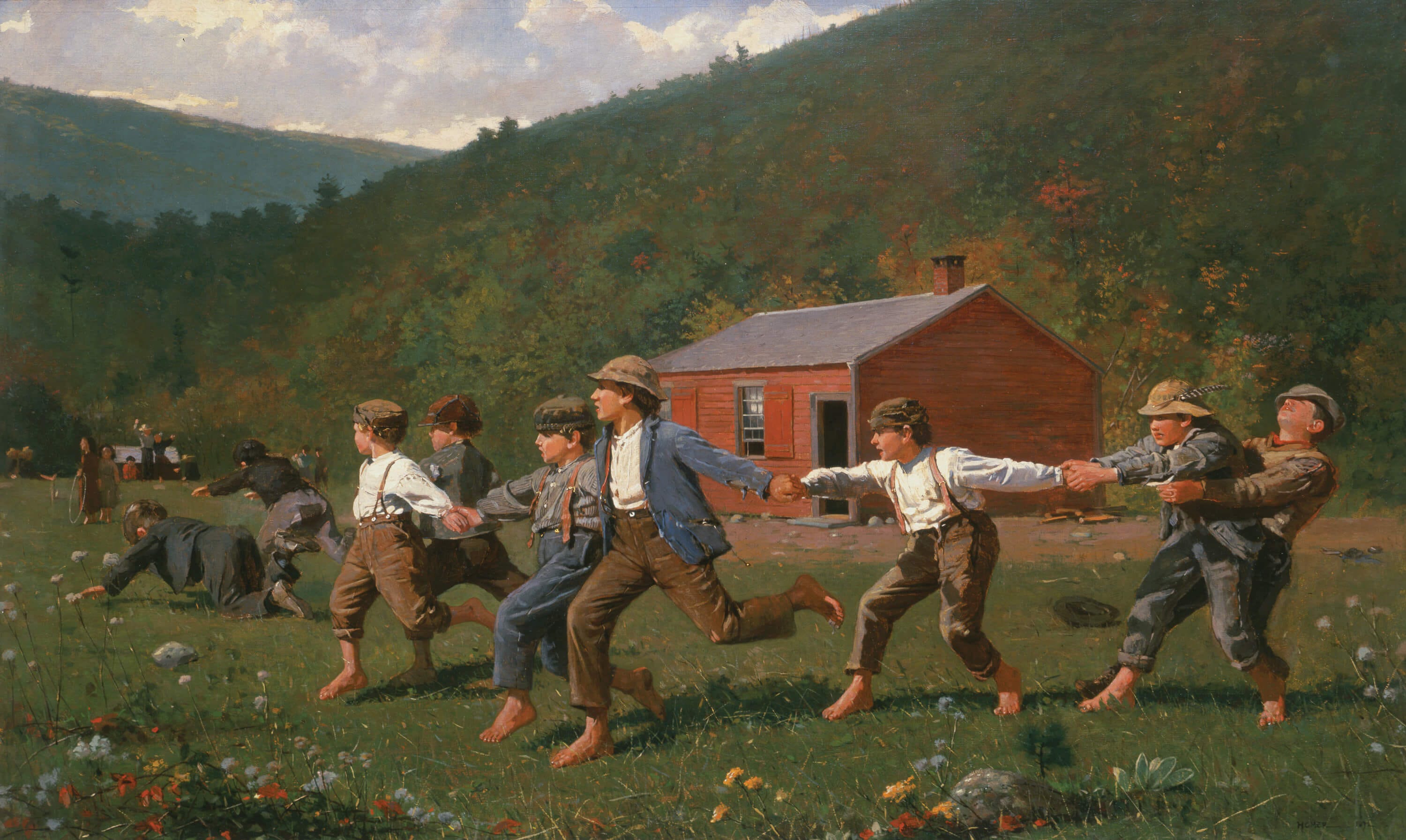
When Dr. John Senior set out to repair the reading of his university students, he found a deeper hole than he expected to fill. He sat young men and women down with the children’s books they ought to have met at four and eight and ten and twelve, and asked them to fill in what they had missed. The exercise worked, but it uncovered something he had not gone looking for. “The problem isn’t only books,” he wrote; “it isn’t only language; it is things: It is experience itself that has been missed.”1
He knew his students had read too little. What he did not expect was that they had lived too little. They had not waded a cold creek in April, or worked the soil in a garden, or held a struggling beetle in a cupped hand and felt it tick against the palm. The stories did not click because the words pointed at a world the reader had never touched.
We begin here because it is the least obvious thing about a child’s education, and one of most important. A great many earnest, bookish families labor under a quiet assumption: Put the right books in front of our children, and the rest will follow. The books matter enormously. We have staked a great deal on the conviction that they do. But a book is fruit, not root. Fruit set on a starved tree comes out small and sour, if it comes at all.
Nihil in Intellectu Nisi Prius in Sensu
There is an old Scholastic maxim that Senior was fond of quoting: Nihil in intellectu nisi prius in sensu. Nothing reaches the intellect that did not first pass through the senses.2 It is not a sentimental slogan, but rather a plain description of how a human mind actually fills. We do not begin with ideas and work down to things. We begin with things. Wet, cold, loud, bright, particular things. From them we climb to ideas. The smell of rain on dry soil comes first. The word petrichor comes much, much later, if it comes at all, and it means nothing to a person who has never stood in that rain.
Charlotte Mason, writing in England a century before Senior, said the same thing from the other end of childhood, from the nursery rather than the lecture hall. “In his early years the child is all eyes,” she observed. He “gets knowledge by means of his senses,” gathering the world through sight and touch and taste and hearing before he can be reasoned with at all. Hand such a child a tidy classification out of a textbook, the parts of a flower or the orders of birds, before he has crushed a petal or watched a wren, and you have taught him almost nothing. As Mason put it, a classification “got out of books, that the child does not make for himself and is not able to verify for himself, cultivates no power but that of verbal memory.”3
A child can be taught to say true things he does not understand, and we may mistake the saying for the knowing. It is the oldest counterfeit in education.
Imagination or Infertile Fantasy?
Plant the best children’s literature in the brightest young mind, Senior warns, and if “the soil of those minds has not been richly manured by natural experience, you don’t get the fecund fruit of literature which is imagination, but infertile fantasy.”4
Imagination and fantasy are not the same thing. We tend to use the words interchangeably, and Senior would have us stop. Imagination is the power to recombine real things into new shapes. You picture a dragon because you have known the heat of a fire and the cold weight of a serpent and the menace of a thunderhead, and have fused them into something real. Fantasy, the infertile kind, is what you are left with when there are no real things to recombine. It glitters and goes nowhere. It is the difference between a child who dreams of dragons because he has lain in the grass and watched a hawk fold its wings, and a child who consumes dragons by the dozen on a glowing screen and could not tell you the color of the sky last evening.
Mason draws the same line, gently, around what she calls naturalists’ books. She does not despise them. Far from it. But she insists they have one proper office and only one: To give the child “delightful glimpses into the world of wonders he lives in, to reveal the sort of things to be seen by curious eyes, and fill him with desire to make discoveries for himself.”5 The book is meant to send the child outdoors. When the book becomes a substitute for the outdoors, it has failed at the very thing it was for.
Consider what this does to the so-called Great Books, the cathedral of Western thought that we all want our children to inhabit. Senior, who spent his life teaching exactly those books, issued a warning that ought to chasten anyone who loves them. Drop a young person into a Great Books course “without direct experience of reality and the love of it,” he wrote, and “you turn out smart, disputatious types with little real content to their agile arguments.”6
He made the point another way in The Death of Christian Culture. The seeds of our tradition are perfectly good seeds. Plato, Aristotle, Augustine, and Aquinas have not failed us. “The seeds are good but the cultural soil has been depleted.”7 The great ideas of the West “thrive only in an imaginative ground saturated with fables, fairy tales, stories, rhymes and adventures,” and that ground is itself laid down on something even more elemental: Dirt, weather, animals, work, the body’s long apprenticeship to the real.
The Machine in the Nursery
It would be a comfort to think this was someone else’s problem, a deficiency of the inner city or the screen-addled teenager. It is not. It is in our houses, and most of it glows.
Senior was blunt about the chief culprit of his day, and time has only made him more right. He named television’s two governing defects: “its radical passivity, physical and imaginative, and its distortion of reality.”8 A child before a screen sits still while the images do the moving. He does not, in Senior’s phrase, exercise the eye by “noticing” things, choosing what to look at and how long to look. He does not leap, as a reader must, to the third thing hidden inside a metaphor. The screen does the seeing and the leaping for him, and his own powers go slack from disuse, the way a limb goes slack in a cast.
We are not interested in pretending the modern tablet is gentler than the old cabinet television. It is not. It is the same machine, smaller, and now it follows the child into the car, the bed, and the bathroom. The question is not which programs to choose. The question is what the device is doing to the faculty of attention itself, the faculty on which every later good, reading included, entirely depends. A mind that has never had to be still and watch a thing long enough to love it will not later sit still with a hard book.
A Word for the Books We Love
None of this is an argument against reading. We want to be very clear, because the temptation, having heard all this, is to swing wildly to the other side and conclude that books are a distraction from real life. They are not. They are one of the highest goods real life affords.
Notice, too, that reading rightly done is itself a bodily and sensory experience. Senior’s own remedy was more reading, not less. What he prescribed was “first and foremost reading aloud around the fireplace of a winter’s evening or on the porch of a summer’s afternoon.”9 A child read to on a parent’s lap is having an experience as real as a walk in the woods: A warm voice, a particular room, the smell of the fire, the weight of the book, the parent’s arm around him. The story enters through the senses, the way everything worth keeping does. The cold, solitary, glowing rectangle is the counterfeit. The fireside is the real thing.
So the order we are after is not things instead of books. It is things first, and then books rooted in things. The word placed in soil that is rich and fertile. Wordsworth said it in seven words that Senior loved to repeat: “Come forth into the light of things.”10 Come forth first. The library will keep.
In Our Home
We are wary of turning any of this into a program, because the moment a living thing becomes a checklist, it begins to die. So take what follows as suggestions, from one tired and hopeful family to another, and leave the rest.
If you carry away a single rule, let it be this one. Out before in. The world first, the book second. A child meets the thing before he meets the word for it, and the word, when it arrives, has somewhere to land. Everything below is only that rule applied over an ordinary day.
Out. Get outside every day, and do not wait for fair weather. Mason held that winter walks are as necessary as summer ones, and she was right; the seasons are half the curriculum, and a child who has only known temperate, climate-controlled afternoons has been cheated of three-quarters of the world. Cold is information. So is mud. Let them climb the tree, keep a nature notebook of the actual bird they saw, and tend something alive, whether a garden bed or a few hens or one tomato plant on a windowsill, because a child learns more from forgetting to water a living thing than from any worksheet about it.
Then in. When the book comes off the shelf, let it come to name what the senses have already met. Keep field guides low and within reach, and open them after the walk rather than instead of it. Read aloud every day, on the porch when the weather allows. A good book sends the child back outside with sharper eyes. It does not keep him on the couch.
Underneath both halves of the rule sits the hardest discipline of all for loving and anxious parents: Say less. Mason called it “masterly inactivity,” and elsewhere “wise letting alone.”11 “Nature is her own mediator,” she wrote; she “will prick the brain with problems and the heart with feelings,” and our part is mostly “to sow opportunities, and then to keep in the background, ready with a guiding or restraining hand only when these are badly wanted.”12 The urge to narrate the woods, to quiz and label and improve every passing moment, is the very thing that gets between the child and the world. Open the door. Then close your mouth.
It is summer, and recently our children spent every night for a week catching fireflies, or lightning bugs, as we call them here in the southern United States. Many conversations were had about what kind of jar was needed, why the lid needed to have holes in it, and the best methods for catching them. Our children made real, lasting memories of being outside in the humidity and fading daylight that will bring any science readings about fireflies to life for them.
Do not be discouraged if your own childhood was spent indoors, or if your present life is loud and paved and pressed for time. None of us does this perfectly. The psalmist summons the whole creation to praise: “Praise the LORD from the earth, ye dragons, and all deeps: Fire, and hail; snow, and vapour; stormy wind fulfilling his word.”13 A child who has felt those things on his own skin reads that verse with his whole body.
The books we are bringing back at Chapter House, the fables and hero tales that built the imagination of the West, are meant to be planted in exactly this kind of soil. They are fruit for a mind already rooted, seed for ground already broken and watered by real weather and real dirt and real wonder. Give your children the world first. Then give them the words.
John Senior, The Restoration of Christian Culture (1983; repr. Norfolk, VA: IHS Press, 2008).
Nihil in intellectu nisi prius in sensu (”nothing is in the intellect that was not first in the senses”) is a Scholastic axiom rooted in Aristotle and central to the thought of St. Thomas Aquinas. Senior invokes it directly in The Restoration of Christian Culture.
Charlotte Mason, Home Education (1886). The quotations in this section are drawn from “The Child Gets Knowledge by Means of His Senses” and “Field-Lore and Naturalists’ Books.” Home Education is in the public domain.
Senior, The Restoration of Christian Culture.
Mason, Home Education, “Field-Lore and Naturalists’ Books.”
Senior, The Restoration of Christian Culture.
John Senior, The Death of Christian Culture (1978; repr. Norfolk, VA: IHS Press, 2008), from the appendix on the thousand good books.
Senior, The Restoration of Christian Culture.
Ibid.
William Wordsworth, “The Tables Turned,” in Lyrical Ballads (1798). Senior was fond of the line and renders it “come out into the light of things” in The Restoration of Christian Culture.
Mason, Home Education, “Lessons as Instruments of Education.”
Ibid.
Psalm 148:7-8 (King James Version).
I highly recommend “For the Children's Sake: Foundations of Education for Home and School
by Susan Schaeffer Macaulay,” who reflects on these same principles. This book profoundly influenced my homeschool choices many years back, and its message is timeless. It is written by the daughter of the reknown Francis Schaeffer.
I am so grateful I was able to have an outdoor childhood on five acres with animals and garden and a creek with crawdads. I was also a bookworm and the two definitely went hand in hand. I am also grateful for the period we all went through during the lockdowns. We ditched much of the computer learning: instead, my daughter raised chickens, baked bread, made cheesecake, learned to crochet and read good books. The skills she learned from that time have served her far better than any of the online curriculum.
If you can weave these experiences into your kids’s lives it is so worth it.